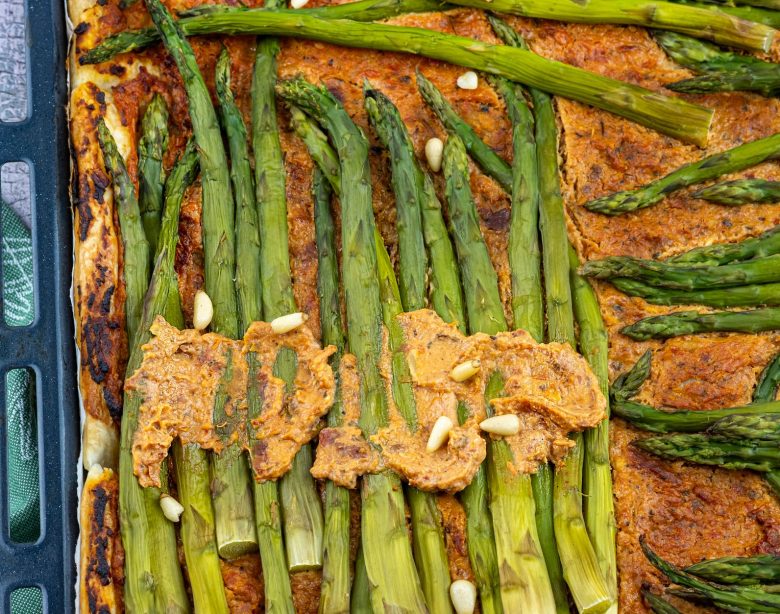
A sheet of puff pastry, a bunch of asparagus, and a few slices of cooked ham make a spring dinner you can cut into squares and eat with a fork or pick up by the edges. The asparagus roasts right on the tart, while a thin layer of Dijon and sour cream adds a little tang under the ham and cheese. Serve it warm with a bowl of greens or sliced apples while the pastry is crisp.
Two small moves make a big difference here. Score a border so the edges can rise around the filling, and blot the asparagus dry so the pastry underneath has a chance to bake through. You can do both while the oven heats. Once the tart goes in, there’s time to set the table and figure out who gets the corner pieces.
What you’ll need
One tart makes four dinner servings with a side. Allow about 45 minutes once the pastry is thawed, including a short rest before slicing.
- 1 sheet frozen puff pastry, thawed and still cold, about 8 to 9 ounces (225 to 255 g)
- 1 bunch asparagus, about 1 pound (450 g) before trimming
- 1 teaspoon olive oil
- 1/8 teaspoon fine salt and a few grinds of black pepper
- 3 tablespoons sour cream
- 2 teaspoons Dijon mustard
- 1 cup shredded Gruyere or sharp white cheddar (about 4 ounces or 115 g), divided
- 4 ounces (115 g) cooked ham, thinly sliced or cut into small pieces
- 1 large egg, beaten with 1 teaspoon water for brushing the border
- All-purpose flour for dusting, if needed
Look for thin to medium asparagus spears that are roughly the same size so they finish together. If the stalks are as thick as your thumb, halve them lengthwise after trimming. Leftover baked ham works well, especially when sliced thin enough to lie flat. If the ham is damp from the package or the refrigerator, blot it too. Gruyere melts smoothly and has a nutty flavor, while sharp cheddar gives the tart a little more bite.
How to make the tart
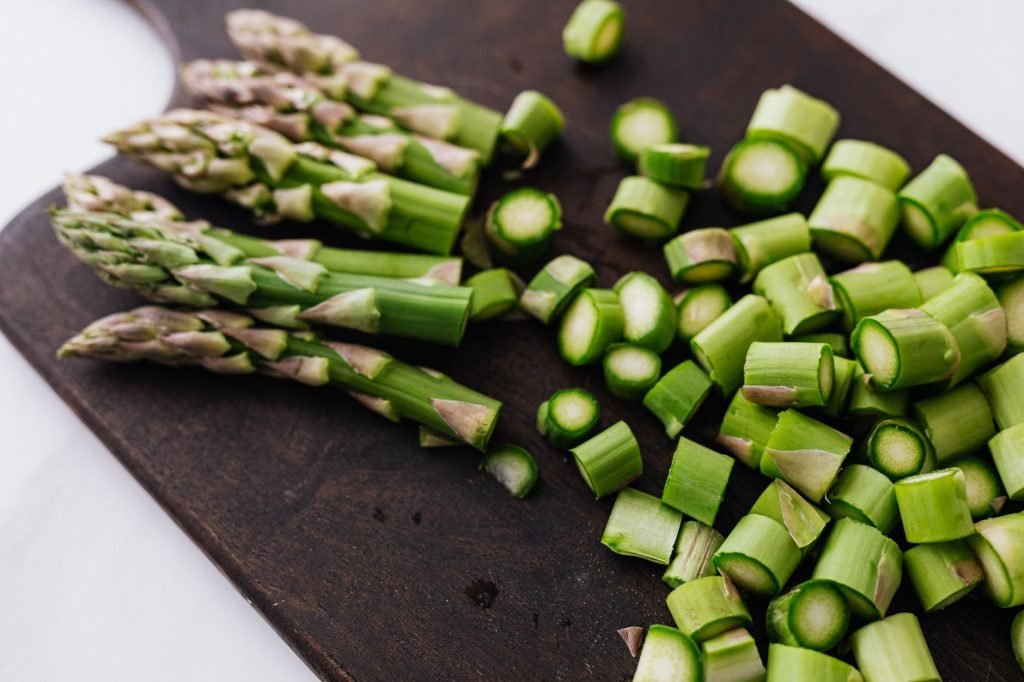
- Heat the oven and prep the asparagus. Set a rack in the lower third of the oven and preheat to 425 degrees F (220 degrees C). Line a rimmed baking sheet with parchment rated for that temperature. Rinse the asparagus and pat it dry with a clean kitchen towel, paying particular attention to the tips where water can collect. Cut away the tough, pale ends. Lay the spears on the towel while you prep the pastry, then blot any moisture from the cut ends.
- Score the pastry border. Unfold the cold pastry on the parchment. If needed, lightly dust the top with flour and roll it just enough to smooth the seams and make a rectangle roughly 10 by 12 inches (25 by 30 cm). With the tip of a sharp knife, trace a line 3/4 inch (2 cm) in from each edge. Use light pressure to mark the surface without cutting all the way through. Prick the center with a fork every inch or so, leaving the rim untouched. The fork holes help keep the center flat under the topping.
- Spread the filling and arrange the spears. Stir the sour cream and Dijon together. Spread a thin layer inside the score line, then scatter half the cheese over it. Lay the ham in an even layer, tearing larger slices to fit. Toss the dried asparagus with the oil, salt, and pepper just before putting it on the tart. Set the spears side by side in a single layer, alternating the direction of the tips if that helps them fit. Cut any especially long spears to fit inside the border. If you have extras, roast them beside the tart where there’s room. Sprinkle the remaining cheese over the asparagus.
- Brush and bake. Brush the top of the rim lightly with the beaten egg, taking care to keep it from running down the pastry edges. Bake for 22 to 28 minutes. Look for a well-risen, deep golden rim, bubbling cheese, and asparagus that yields when pierced with the tip of a knife. Lift one corner with a spatula to check the underside. It should feel firm and look golden. If the top is ready and the base is still pale, give it another few minutes on the same rack, loosely shielding the top with foil if needed.
- Let it settle before slicing. Leave the tart on the baking sheet for 5 minutes, then slide it onto a cutting board. Use a sharp knife to cut it into four large rectangles or eight smaller pieces. A gentle sawing motion through the raised edges keeps the flaky rim from getting crushed.
Fit it into dinner
Thaw the pastry in the refrigerator according to the package directions. It should unfold easily and still feel cool when you work with it. If a fold resists, give it a few more minutes before opening it. If the pastry becomes tacky and floppy while you’re scoring it, slide the baking sheet into the refrigerator for 10 minutes to firm it up before you add the filling.
For quicker assembly at dinnertime, shred the cheese, slice the ham, and stir together the mustard and sour cream earlier in the day. Refrigerate them separately. You can also wash and trim the asparagus ahead, then wrap it in a clean towel and refrigerate it. Give it a quick blot before adding the oil. Assemble the tart once the oven is nearly ready so the filling spends as little time as possible sitting on the raw pastry.
If a pastry seam splits when you unfold it, pinch it together with your fingertips before you roll the sheet. Check the score line again once the filling is on. A stray strip of ham or a clump of cheese across that line can weigh down the rim. Nudge it back toward the center with the tip of a spoon so the edge has room to puff.
A lemony green salad balances the rich pastry, and a cup of tomato soup goes well with the smaller slices. For kids who like shorter bites of asparagus, cut a few spears into two-inch pieces before arranging them at one end of the tart. Keep those pieces in a single layer so they cook at the same pace as the whole spears. If you roasted extra spears alongside the tart, serve them with a squeeze of lemon or save them to fold into scrambled eggs the next morning.
Store and reheat leftovers
Refrigerate leftover slices in a covered container within 2 hours of baking and eat them within 3 days. For a crisp base, set the slices on a baking sheet and warm them at 375 degrees F (190 degrees C) until hot throughout, about 8 to 12 minutes depending on their size. A toaster oven works well for one slice. If you’re packing a piece for lunch, keep it chilled and serve it cold or warm it when you’re ready to eat.