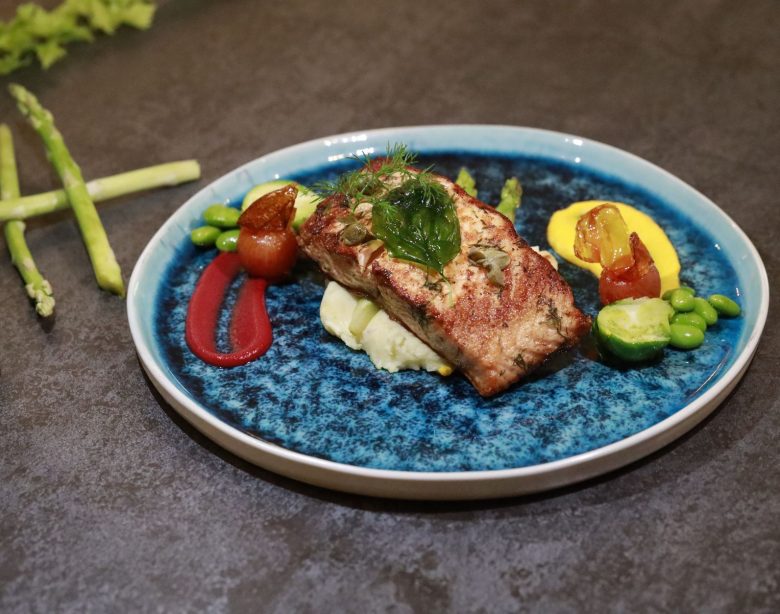
Frozen peas do more than fill a corner of the dinner plate. Crush them with butter, lemon, and fresh herbs and they turn into a sweet, spoonable side for baked salmon. A few peas stay whole and pop as you eat, and a squeeze of lemon over the fish ties the two together.
Bring the water to a boil while the salmon bakes, then drop in the peas as soon as the fish comes out. Cook them just until they’re bright green and tender enough to crush. By the time you’ve drained and mashed them, the salmon has had a few minutes to rest and both parts of dinner are ready to serve.
What you’ll need
Serves 4. Allow about 30 minutes, including oven preheating. Set out a rimmed baking sheet, a medium saucepan, a colander, and a potato masher or sturdy fork. Keep a mug by the colander to remind you to save a little cooking water. An instant-read thermometer makes it easy to check the center of each fillet.
For the salmon
- 4 salmon fillets, 5 to 6 ounces each [140 to 170 g], thawed if frozen
- 1 tablespoon olive oil [15 mL]
- 1/2 teaspoon fine sea salt
- 1/4 teaspoon ground black pepper
- 1 lemon, for zest, juice, and wedges to serve
For the pea and herb mash
- 3 cups frozen green peas [about 450 g]
- 2 tablespoons unsalted butter [28 g]
- 2 tablespoons finely chopped flat-leaf parsley
- 1 tablespoon finely chopped fresh dill
- 1 tablespoon lemon juice [15 mL], from the lemon above
- 1/4 teaspoon fine sea salt, plus more to taste
- 1 to 3 tablespoons reserved pea cooking water [15 to 45 mL], as needed
Bake the salmon and mash the peas
- Heat the oven and prep the lemon. Set a rack in the middle of the oven and heat it to 400°F [200°C]. Line a rimmed baking sheet with parchment. Grate about 1 teaspoon of lemon zest, stopping when you reach the white pith. Halve the lemon, squeeze 1 tablespoon of juice from one half for the peas, and cut the other half into wedges. Chop the parsley and dill so they’re ready to stir in as soon as the peas are mashed.
- Season the fish. Pat the fillets dry with paper towels and set them on the baking sheet, skin side down if they have skin. Leave space between the pieces. Rub the tops with the olive oil and season evenly with the salt, pepper, and lemon zest. If a fillet has a thin belly flap, tuck it underneath so that edge cooks more evenly with the rest of the piece.
- Bake and put the water on. Bake until the thickest part of each fillet reaches 145°F [63°C]. Start checking at 9 minutes for thin pieces. Fillets about 1 inch [2.5 cm] thick typically take 12 to 16 minutes. Slide the thermometer in from the side so the tip reaches the middle. The flesh should look opaque and separate easily into flakes. Transfer individual pieces to a clean plate as they finish and let them rest. While the fish bakes, bring about 4 cups [950 mL] of water to a boil in the saucepan. If it boils early, lower the heat, then bring it back to a full boil as the fish comes out.
- Cook the peas just until bright and tender. Tip the peas straight from the freezer into the boiling water. Once the water returns to a simmer, cook for 2 to 4 minutes, following the package directions if they call for longer. Check a pea by pressing it against the side of the pan with a spoon. It should crush easily without a hard center. Scoop out about 1/4 cup [60 mL] of the cooking water, then drain the peas well.
- Mash while the salmon rests. Return the drained peas to the warm saucepan off the heat. Add the butter and salt, then press with a masher until most of the peas are crushed. Stir in the parsley, dill, and measured lemon juice. Add the reserved water a tablespoon at a time until the mash holds together in a soft mound. Taste and add a little salt or another squeeze of lemon if needed. Spoon onto plates and serve with the salmon and lemon wedges.
Make the mash the way your family likes it
For a coarse mash, a few passes with a potato masher are enough. If you’re using a fork, press the peas against the side of the pot in small batches. For a smoother texture, use an immersion blender in a deep container and pulse briefly, adding just enough reserved water to help the blades move. If the mash is already looser than you’d like, stir it over low heat for a minute to let some moisture evaporate. If you forget to save the cooking water, a splash of warm tap water works here too.
Parsley and dill give the peas a fresh, savory flavor. If you have chives on hand, use a tablespoon in place of the dill. For a sweeter, more fragrant mash, try 1 teaspoon of chopped mint in its place and taste before adding more. You can also scoop out a portion of buttered peas before adding the herbs. Give it a quick crush for anyone at the table who prefers a milder side.
Round out the plates
Serve the peas alongside the salmon so everyone can decide how much to scoop up with each bite. If you cooked skin-on fillets and someone prefers theirs without the skin, slip a thin spatula between the flesh and skin after baking. Check each portion for small bones as you serve, especially if you’re flaking the fish into bite-size pieces for children.
Warm a few slices of bread to swipe through the mash, or serve the salmon and peas with rice or boiled baby potatoes for bigger appetites. Get the starch going before the salmon goes into the oven so you can focus on the fish and peas at the end. For something crisp with no extra cooking, put sliced cucumbers on the table with the lemon wedges.
Store and use the leftovers
Refrigerate the salmon and pea mash in separate shallow, covered containers within 2 hours of cooking and use them within 3 to 4 days. To serve them warm, cover the salmon loosely and reheat it gently. Warm the mash in a small saucepan with a splash of water, stirring as you go. Heat both to 165°F [74°C]. A squeeze of lemon or a pinch of freshly chopped herbs perks up the mash after reheating.
For a quick lunch, spread cold pea mash on toast and flake chilled salmon over it. Add sliced cucumber for crunch, or stir the mash with a spoonful of plain yogurt and tuck it into a wrap with the fish and a handful of lettuce.