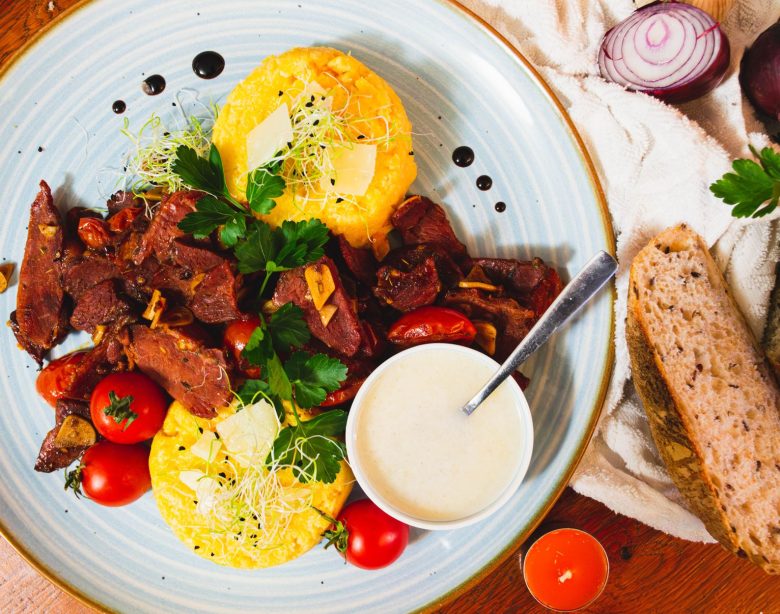
A pan of baked polenta with tomato beans gives everyone a choice between crisp edges and a soft, saucy middle. Cook the polenta until thick, spread it in a shallow dish, and chill it until firm enough to cut. The slices get a head start in the oven while you simmer two cans of beans with crushed tomatoes. Spoon the beans over the center for the last stretch of baking and leave the ends of the slices exposed so they stay crisp.
This is a good dinner to split across two days. Make the polenta when you have time to stand at the stove, then come back to it when you need dinner. The beans take about as long as the first bake, so once the polenta goes into the oven, you can make the topping and set the table while it simmers.
What you’ll need
Serves 4 as a main dish. You’ll need an 8-inch (20 cm) square pan for chilling the polenta, a rimmed baking sheet, and a large skillet. Allow at least 2 hours for chilling, or make the polenta the day before.
For the polenta
- 4 cups (950 mL) water
- 1 teaspoon fine sea salt
- 1 cup (160 g) medium-grind yellow cornmeal or traditional polenta
- 1 tablespoon unsalted butter or olive oil
- 2 tablespoons olive oil, for the baking sheet and slices
For the tomato beans
- 1 tablespoon olive oil
- 1 small yellow onion, finely chopped
- 2 garlic cloves, minced
- 1 tablespoon tomato paste
- 1 teaspoon dried oregano
- 1 can (15 ounces or 425 g) crushed tomatoes
- 2 cans (15 ounces or 425 g each) cannellini beans, drained and rinsed
- 1/4 cup (60 mL) water, plus more as needed
- 1/4 teaspoon fine sea salt, plus more to taste
- Black pepper, to taste
- 1/4 cup (25 g) finely grated Parmesan, optional
Cook and chill the polenta
- Get the pan ready. Line the square pan with parchment, leaving an overhang on two opposite sides so you can lift out the slab later. Have a spatula handy. Thick polenta starts to set quickly after you take it off the stove.
- Whisk the cornmeal into the water. Bring the water and salt to a boil in a heavy saucepan. Pour the cornmeal in a slow, steady stream while whisking. Turn the heat down to low as soon as the pot returns to a simmer. Watch for hot spatters as the mixture thickens, and turn the heat down further if it starts bubbling vigorously.
- Cook until the grains are tender. Simmer gently for about 25 to 35 minutes, stirring often with a wooden spoon and scraping across the bottom and into the corners. The polenta is ready when a spoon leaves a trail that closes slowly and a cooled dab tastes tender without a hard, gritty center. If the mixture gets stiff before the grains soften, stir in a small splash of hot water and keep cooking. Stir in the butter or oil off the heat.
- Spread it while it’s hot. Scrape the polenta into the lined pan and smooth it into an even layer. Let the steam subside, then refrigerate until firm all the way through, at least 2 hours. Cover once cold if you’re leaving it overnight. The center should feel as firm as the edges when you press it lightly.
Bake the slices and simmer the beans
- Cut and oil the slices. Heat the oven to 425°F (220°C). Lift the slab onto a cutting board and peel off the parchment. Cut it in half, then cut each half into four rectangles. Rub half the baking oil over a rimmed baking sheet. Set the slices on the sheet with a little space between them and brush their tops with the remaining oil.
- Give the polenta a head start. Bake for 20 to 25 minutes, until the bottoms are golden and a thin spatula slides underneath without tearing them. If a slice clings, give it another few minutes before trying again. Flip the pieces and arrange them in two rows of four with their short ends facing each other near the center of the pan.
- Make the tomato beans during the first bake. Heat the tablespoon of oil in a large skillet over medium heat. Cook the onion for 5 to 7 minutes, stirring occasionally, until soft and translucent. Stir in the garlic, tomato paste, and oregano and cook for about 1 minute, until fragrant. Add the crushed tomatoes, beans, water, salt, and pepper. Simmer uncovered for 10 to 15 minutes, stirring occasionally, until the sauce clings to the beans and still falls easily from a spoon. Add water a tablespoon at a time if the sauce gets too thick. Taste before adding more salt, especially if you’re using Parmesan.
- Cover the middle and finish baking. Spoon the hot beans across the seam where the two rows meet, leaving the outer ends bare. If the topping starts spreading across the pan, hold back a spoonful or two to pass at the table. Scatter on the Parmesan, if using, and return the pan to the oven for 8 to 10 minutes. Look for bubbling sauce and lightly browned polenta tips. Lift two slices onto each plate with a wide spatula and spoon any beans left on the pan over the top.
Use the beans and extras you have
Great Northern beans, chickpeas, and pinto beans all work here. If you cook dried beans in batches, use about 3 cups of fully cooked, drained beans in place of the two cans. For a thicker sauce without extra simmering, mash a few spoonfuls of beans against the side of the skillet and stir them back in. Whole canned tomatoes work in place of crushed if you break them up with a spoon as they cook. A handful of chopped greens can go into the sauce during the last few minutes of simmering.
For a family that likes different amounts of sauce, leave a couple of slices plain at one end of the sheet and serve extra beans on the side. The crisp pieces are sturdy enough to dip. If there’s a heel of Parmesan in the fridge, a little grated over each portion goes a long way. The tomato paste left in the can can be frozen in tablespoon portions for another skillet dinner.
Store and reheat
Refrigerate leftovers in shallow covered containers within 2 hours and use within 3 to 4 days. If you know you’ll have extra, store some polenta and beans separately so you can crisp the slices again. Warm plain slices on a baking sheet at 400°F (200°C) and reheat the beans in a saucepan with a splash of water. For slices that are already topped, reheat them together in an oven-safe dish until hot throughout. The covered centers will stay tender, and the exposed edges will firm up again.