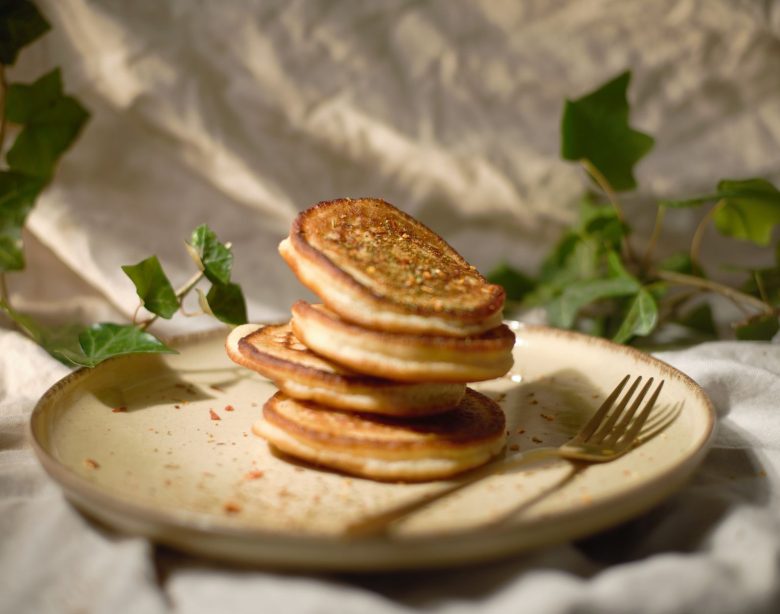
A container of cold rice, the last wedge of cabbage, and an apple are enough to get these skillet pancakes started. The rice makes them filling, the cabbage softens into the batter, and the little pieces of apple stay juicy. The edges turn golden and crisp wherever a few grains of rice meet the hot skillet. Serve them savory, with a spoonful of plain yogurt or a bowl of soup.
The most helpful thing you can do is fry a small pancake before filling the skillet. Leftover rice can be dry and crumbly or soft and sticky, and some apples give off more juice than others. One spoonful tells you whether the batter needs a splash of milk, a little flour, or simply another minute on the first side.
What you’ll need
Makes about 12 small pancakes, enough for four servings with a side. A large skillet will hold three or four at a time.
- 1 1/2 cups cold cooked rice [about 240 g], white or brown
- 1 cup finely shredded green cabbage [about 70 g], lightly packed
- 1/2 cup finely diced apple [about 65 g], from about half a medium apple
- 2 large eggs
- 1/3 cup all-purpose flour [40 g], plus more if needed
- 2 tablespoons milk [30 mL], plus more if needed
- 1/4 teaspoon fine salt, or a pinch if the rice was already salted
- 1/8 teaspoon ground black pepper
- 2 tablespoons neutral cooking oil [30 mL], divided
Plain rice is easy to season, and rice cooked in broth works if its flavor fits the meal. A crisp apple gives you little pockets of sweetness. Leave the peel on if it’s thin, or peel the apple if you prefer a more even texture. Slice across the cabbage shreds a few times so they fit inside each pancake. Long strands tend to catch on the spatula and pull the edges apart.
Mix the batter and cook one first
- Break up the cold rice. Put the rice in a mixing bowl and press any firm clumps against the side with the back of a spoon. Crush a few spoonfuls of rice as you go. Those mashed grains help the batter hold together, and the whole grains give the pancakes some chew.
- Make the batter. Beat the eggs with the milk, salt, and pepper in a small bowl. Stir them into the rice, then sprinkle the flour over the mixture and stir until you see no dry pockets. Fold in the shredded cabbage and diced apple. The batter should hold in a loose mound on a spoon and flatten easily when pressed. If the cabbage is wet from washing, pat it dry before adding it.
- Fry a test pancake. Heat a large nonstick or well-seasoned cast-iron skillet over medium heat. Add about a teaspoon of oil and tilt the skillet to coat it. When the oil shimmers, drop in a heaping tablespoon of batter and pat it into a thin round with the back of the spoon. You should hear a gentle sizzle. Cook until the edges look dry and the underside is golden, about 2 to 3 minutes. Slide a thin spatula all the way under it, flip, and cook the other side until golden and the center is set and reaches 165°F [74°C]. Let it cool briefly before tasting.
- Adjust the bowl before you cook the rest. If the test pancake spreads into a puddle or has wet batter around the edges, stir in 1 tablespoon of flour and try another small one. If the scoop looks dry and the grains separate when you press it flat, stir in milk 1 teaspoon at a time until the mixture holds together. If the pancake tears where the bottom is still pale, give the next one more time before flipping. Add a pinch of salt or pepper if the cooked sample needs it.
- Cook in batches. Scoop about 3 tablespoons of batter per pancake and flatten each round to about 3 1/2 inches [9 cm] across and 1/4 inch [6 mm] thick. Leave room to get the spatula between them. Cook for about 3 minutes on the first side and 2 to 3 minutes on the second, until both sides are golden and the centers are set and reach 165°F [74°C]. Lower the heat a little if the edges darken before the middles cook. Add a thin film of oil between batches as needed.
Keep the edges crisp
Set the cooked pancakes in a single layer on a wire rack while the next batch fries. Stacking them on a plate traps steam and softens the edges. If bits of apple or loose rice start to darken in the skillet, lift them out with the spatula before adding more oil. Give the batter a quick fold before scooping the next batch so the cabbage and apple stay evenly distributed.
Turn the pancakes into dinner
For a meal built from what’s already open, warm a can of drained white beans with a splash of broth and a little black pepper. Spoon the beans alongside the pancakes and add a small dollop of plain yogurt. If there’s soup in the fridge, serve the pancakes on the side for dipping. The crisp edges are especially good with a brothy vegetable soup.
The rest of the apple can go straight onto the table in slices. If you have a little more cabbage on the cutting board, toss it with the remaining sliced apple and a squeeze of lemon or a splash of cider vinegar. A pinch of salt and a drizzle of oil make it a quick slaw while the last batch cooks. Put yogurt or mustard on the table so everyone can season their own plate.
If you have only 3/4 cup of cooked rice, halve the recipe and set out the pancakes as a side. One egg still gives the smaller batch enough binder, and the test pancake works the same way. Measure the cabbage and apple for the smaller batch too. A generous handful of either can make a small bowl of batter hard to flip.
Handle the rice and store any extras
Start with rice that was chilled promptly after cooking and has stayed refrigerated. If you’re saving rice specifically for these pancakes, spread it in a shallow container and chill it as soon as possible, ideally within an hour. Use it within 24 hours of cooking and heat it only once. Cook all the mixed batter in one session, since the cabbage and apple release moisture as they sit.
Refrigerate any extra pancakes promptly in a shallow covered container. Eat them cold within 24 hours of making them, since the rice has already been reheated in the skillet. If you expect to want a second batch hot, make a smaller batch to eat right away and leave the extra cabbage and apple uncut for another meal.