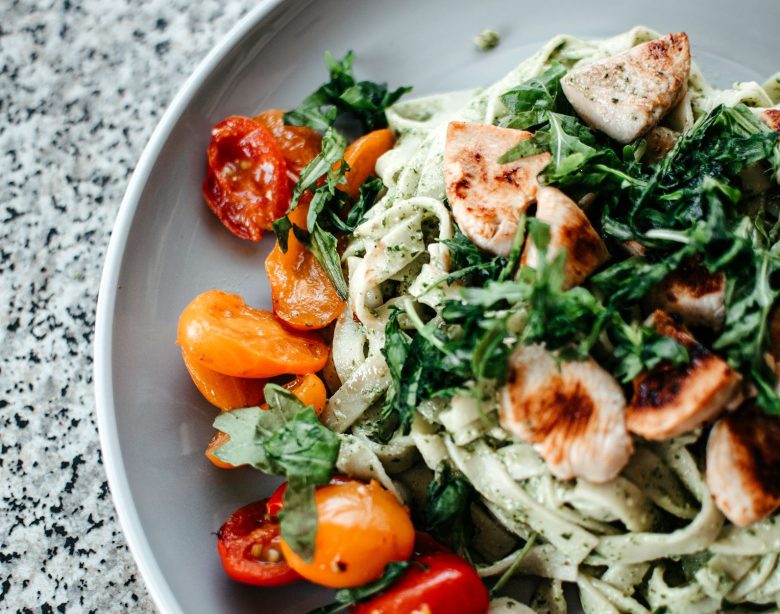
A zucchini, a yellow squash, and a handful of cherry tomatoes can look like odds and ends in the produce drawer. Brown the squash in a skillet, let the tomatoes slump just enough to release their juices, and toss them with pasta and navy beans. A forkful gets a little of everything, from sweet squash to a tomato that bursts when you bite into it.
The beans do two jobs. Mash most of them with a splash of pasta water to make a creamy sauce that settles into the grooves of the noodles. Leave the rest whole so they turn up between bites of vegetables. One can is enough for the skillet, and if you’ve already cooked a pot of navy beans for another meal, this is a good place to use some.
Use the squash you have
Zucchini, yellow straightneck or crookneck squash, and pattypan all work here, alone or together. Cut long squash into half moons about 1/4 inch [6 mm] thick. Quarter a wide squash lengthwise before slicing so the pieces fit on a fork with the pasta. Cut pattypan into bite-size wedges of the same thickness. The skins on small, tender squash can stay on. If a larger squash has a spongy middle with big seeds, scoop it out with a spoon before slicing and measure after trimming.
For a skillet with just one small squash, slice up a bell pepper to make up the difference. Cook the pepper for a couple of minutes before adding the squash so both have time to soften. A handful of corn can fill a smaller gap. Add it with the tomatoes and give it time to heat through.
Ingredients
Serves 4. Allow about 35 minutes. You’ll need a pasta pot, a wide skillet, a bowl, and a fork.
- 12 ounces [340 g] short pasta, such as shells, rotini, or penne
- 1 can navy beans, 15 ounces [425 g], drained and rinsed, or 1 1/2 cups [about 260 g] cooked navy beans
- 3 cups [about 400 g] sliced summer squash
- 1 cup [about 150 g] cherry or grape tomatoes, halved
- 3 tablespoons [45 mL] olive oil, divided
- 3 medium garlic cloves, finely chopped
- 1/2 teaspoon fine salt for the skillet, plus salt for the pasta water and more to taste
- 1/4 teaspoon ground black pepper
- 1 tablespoon [15 mL] lemon juice, plus more to taste
- 1/4 cup [about 20 g] finely grated Parmesan, optional
- 2 tablespoons chopped fresh basil or parsley, optional
How to make summer vegetable and navy bean pasta
- Get the pasta going. Bring a pot of salted water to a boil while you slice the vegetables. Cook the pasta until a piece is flexible with a little firmness in the center, about a minute shy of the package time. Just before draining, dip out 1 cup [240 mL] of the cooking water. The pasta will finish in the skillet.
- Brown the squash. While the pasta cooks, heat 2 tablespoons of the oil in a wide skillet over medium-high heat. Add the squash in a single layer. If your skillet is crowded, cook it in two batches, dividing the oil between them. Leave the first side alone for about 2 minutes to pick up some color, then turn or stir the pieces and cook for another 2 to 4 minutes. Look for golden patches and centers that give a little when pressed with a spatula. Transfer the squash to a plate.
- Start the sauce. Reduce the heat to medium. Add the remaining tablespoon of oil and stir in the garlic for about 30 seconds, until fragrant. Add the tomatoes, the measured salt, and the pepper. Stir for 2 to 3 minutes, until the cut sides look soft and a little juice collects in the pan. Meanwhile, use a fork to mash 1 cup of the beans in a bowl with 1/4 cup [60 mL] of the reserved pasta water. Press the beans against the side of the bowl until you have a loose paste with a few flecks of bean skin.
- Toss everything together. Stir the mash and another 1/4 cup of pasta water into the tomatoes. Add the drained pasta, the squash, and the remaining whole beans. Toss over medium heat for 1 to 2 minutes, until the sauce clings to the pasta and a noodle is tender when you bite it. If the mash sticks in clumps, add more reserved water a tablespoon at a time as you toss. If liquid pools at the bottom, let it bubble briefly while you stir.
- Finish off the heat. Stir in the lemon juice and the Parmesan, if using. Taste a bite with both pasta and squash, then add a pinch of salt or another squeeze of lemon if it needs it. The sauce thickens as it sits, so give it one last splash of pasta water before serving if the noodles look dry. Scatter the herbs over the skillet or put them on the table for everyone to add.
Make it from the pantry
Home-cooked navy beans mash easily when they’re tender enough to crush against the side of the bowl with light pressure. If you’re pulling them from the freezer, thaw them in the refrigerator before measuring. If you have a little bean cooking liquid saved, you can use it for the first splash when you mash. Taste that liquid first so you know how much salt to add to the skillet.
Short pasta with ridges or hollows catches bits of bean, but you can use the noodles already in the cupboard. If you’re finishing two open bags, check the package times and start the slower-cooking shape first. Add the second shape once the difference in cooking times has passed, then start tasting both as they get close.
When fresh tomatoes are scarce, use 1/2 cup [120 mL] of canned diced tomatoes with their juices. Simmer until a spatula drawn across the skillet leaves a clear trail for a moment, then stir in the bean mash. Freeze the rest of the canned tomatoes in a small container for soup or chili. If you’re out of Parmesan, pass toasted breadcrumbs at the table for a little crunch. A slice of sturdy bread crumbled and stirred in a skillet with a teaspoon of oil will do.
Pack up the leftovers
Spoon leftovers into shallow, covered containers and refrigerate within 2 hours of cooking, or within 1 hour if the temperature is above 90 degrees F [32 degrees C]. Eat within 3 to 4 days. To reheat a portion, start with a tablespoon of water in a covered skillet over medium-low heat. Stir gently as the sauce loosens and heat to 165 degrees F [74 degrees C] throughout. Add a second splash of water if the noodles still look sticky.
If you’re cooking beans ahead for another batch, freeze them in meal-size portions with a little cooking liquid. The finished pasta can also be frozen, though the squash will soften when thawed. If you’re counting on tomorrow’s lunch, pack that portion while the skillet is still on the table. Save a pinch of basil or a lemon wedge to add after reheating.