Give kids the streusel bowl first. They can pinch cold butter into flour, brown sugar, and ground ginger until the mixture looks like a jumble of sandy crumbs and little pebbles. Later, they’ll get to lay pear slices over the batter and scatter those crumbs across the top. The slices can go in crooked rows, loose fans, or a patchwork that uses every last piece.
The finished cake has a soft vanilla crumb, a layer of tender pear, and a crisp top with a gentle ginger warmth. It fits in an 8-inch square pan and comes together with a whisk and a spatula. Set out a cutting board for the grown-up and give the kids a clear stretch of counter for their bowl and plate of pears.
Choose pears that will hold their shape
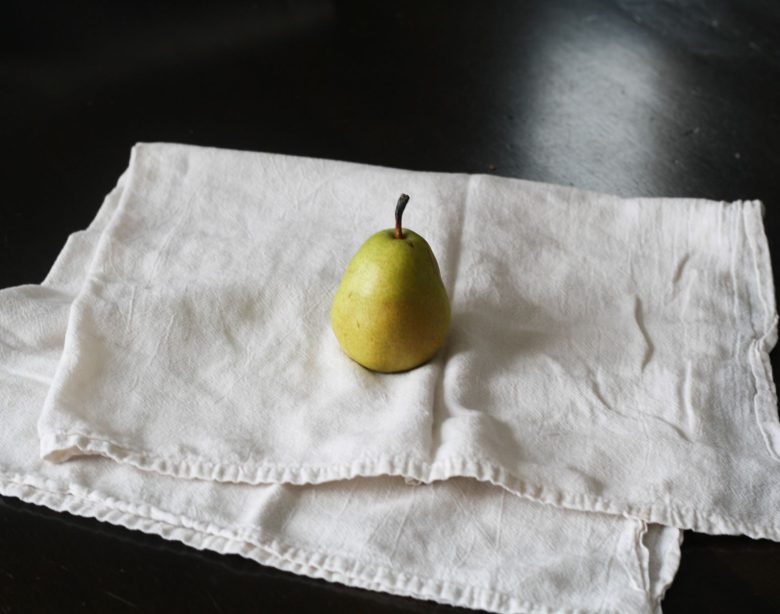
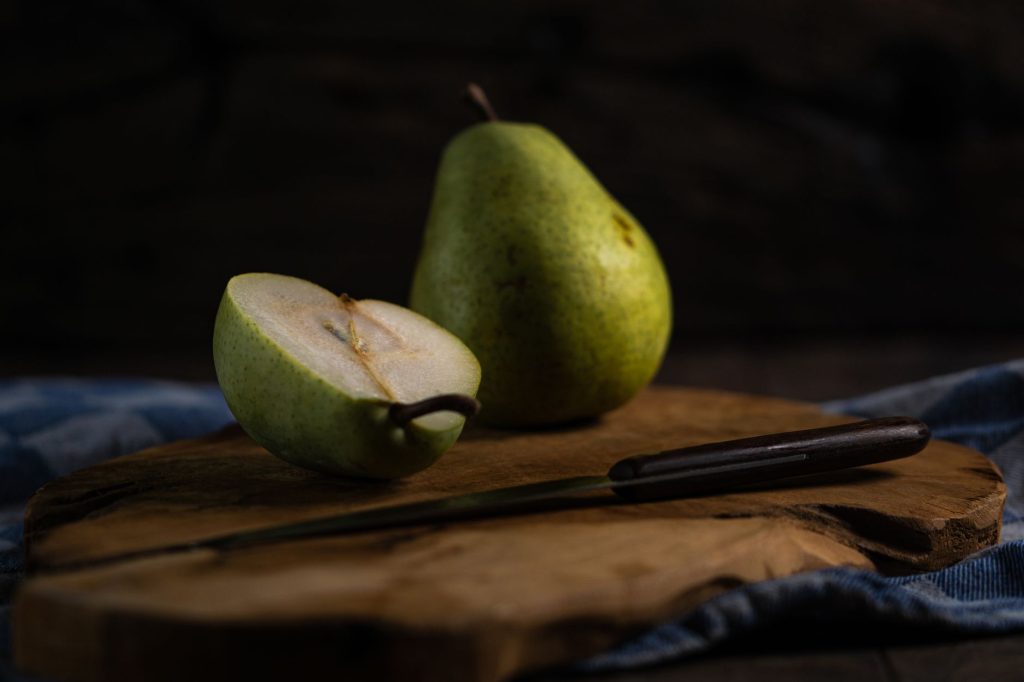
Bosc and Anjou both work well. Look for pears that give a little when you press near the stem and still feel firm around the middle. Very soft pears are harder for small hands to pick up in slices and can leave wet pockets in the cake. Peeling is optional. Leave thin, tender skins on if your family likes them, or peel the pears for a softer fruit layer.
Two medium pears should give you about 2 cups of slices. Pear sizes vary, so let the surface of the batter tell you how much to use. Aim for one layer with a little overlap at the edges. If you have slices left once the pan is covered, save them for a snack while the cake bakes.
Ingredients
Makes 9 squares. Bake time 42 to 50 minutes.
Ginger streusel
- 1/2 cup all-purpose flour (60 g)
- 1/3 cup packed light brown sugar (70 g)
- 1 teaspoon ground ginger
- 1/8 teaspoon fine salt
- 4 tablespoons cold unsalted butter (57 g), cut into small cubes
Pear cake
- 2 medium firm-ripe pears, about 2 cups sliced
- 1 1/2 cups all-purpose flour (180 g)
- 1 1/2 teaspoons baking powder
- 1/2 teaspoon fine salt
- 2 large eggs, at room temperature
- 3/4 cup granulated sugar (150 g)
- 1/2 cup plain full-fat sour cream (120 g), at room temperature
- 1/2 cup unsalted butter (113 g), melted and cooled until just warm, plus more for the pan
- 1 teaspoon vanilla extract
How to make the cake
- Set up the pan. Have an adult position a rack in the center of the oven and heat it to 350°F (175°C). Lightly butter an 8-inch square metal pan. Lay a strip of parchment across the bottom with enough hanging over two opposite sides to make handles. Kids can smooth the paper down with their palms so it stays put while you spread the batter.
- Rub the streusel into crumbs. In a medium bowl, stir the flour, brown sugar, ginger, and salt, breaking up any lumps of brown sugar with the back of a spoon. Add the cold butter. Show kids how to pick up a cube with a little flour and rub it between their fingertips and thumbs. When a handful holds together with a gentle squeeze and breaks apart when nudged, it’s ready. Leave a mix of small crumbs and pea-sized clumps. Refrigerate the bowl while you make the batter.
- Slice the pears. An adult can halve the pears lengthwise, scoop out the cores, and set the halves cut side down for steady slicing. Cut them about 1/4 inch thick (6 mm). Give kids a plate so they can separate the slices and set aside the shorter pieces to fill gaps around the edges of the pan.
- Mix the batter by hand. Whisk the flour, baking powder, and salt in one bowl. In a larger bowl, whisk the eggs and granulated sugar until the mixture looks evenly yellow and a little foamy at the edges. Whisk in the sour cream, melted butter, and vanilla until smooth. Add the dry ingredients and fold with a spatula, scraping along the bottom and turning the batter over until the last streaks of dry flour disappear. The batter will be thick enough to spread with a spatula.
- Layer the pears and scatter the crumbs. Scrape the batter into the pan and guide it into the corners with the back of the spatula. Let the kids lay the pear slices flat on top, working from one side of the pan to the other. The fruit should rest on the surface without being pushed into the batter. Sprinkle the cold streusel over the pears, breaking any large clumps in half as you go.
- Bake and cool. Have an adult put the pan in the oven and check it at 42 minutes. The streusel should be golden and the cake edges should look set. Insert a toothpick near the center, aiming between pear slices. A few moist crumbs are fine. If you see wet batter, bake for another few minutes and check again. Let the cake cool in the pan on a rack for at least 30 minutes before slicing. For the neatest squares, cool it completely and use the parchment handles to lift it onto a board.
Give each helper a job
Set the streusel bowl on a damp kitchen towel so it stays steady while little hands rub in the butter. If a child would rather use a utensil, let them press the cubes against the side of the bowl with a fork. If the butter starts to smear and the crumbs feel greasy, chill the bowl for 10 minutes before finishing. An older helper can level the flour with a straight edge or take over folding once you’ve shown them how to reach the bottom of the bowl.
Keep knives and hot pans with the adult and have kids step back when the oven door opens. Save tasting for the baked cake, since both the unbaked streusel and the batter contain raw flour. While the cake bakes, kids can carry the empty pear plate to the sink and wipe the counter with a damp cloth. Wash hands and the utensils that touched the raw batter with warm, soapy water.
Serving and storing
Serve the squares slightly warm if you like the pears soft and juicy, or wait until the cake is cool for a firmer crumb. Once it’s completely cool, cover the pan and keep the cake at room temperature for up to one day. Refrigerate leftovers in a covered container for up to three days. The topping will soften in storage. To bring back some crunch, warm squares on a baking sheet at 300°F (150°C) for 8 to 10 minutes.
To freeze, wrap cooled squares individually and put them in a freezer bag for up to two months. Thaw the squares in the refrigerator overnight, then unwrap and warm them in the oven as above. Individual portions make it easy to pull out just what you need for an afternoon snack.