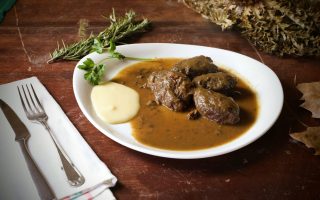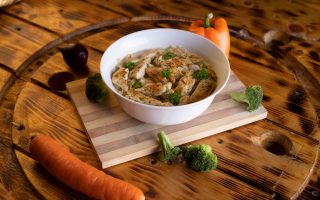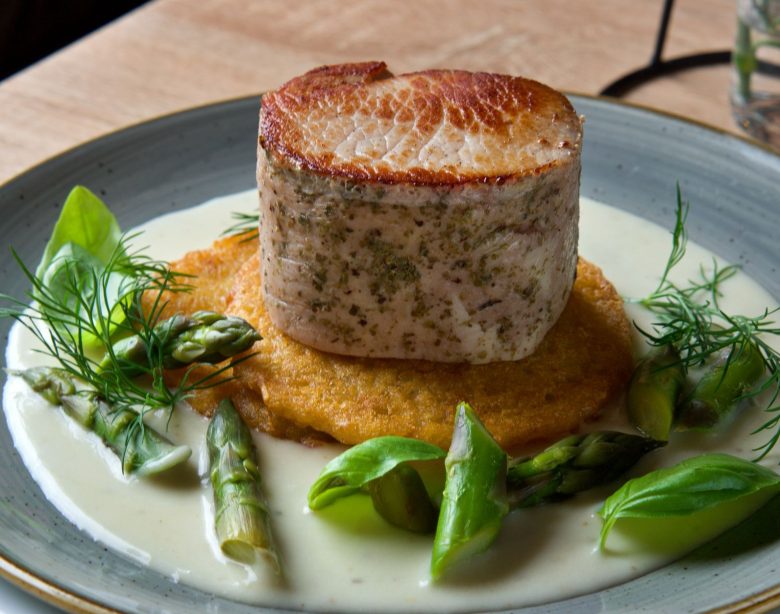
A pork loin roast gives you time to set the table while dinner cooks, and the fennel and apples make the same pan smell like a whole meal. The fennel goes in with the pork, cut into sturdy wedges so the edges brown while the layers stay together. The apples join later, once the fennel has started to soften. By the time the pork is ready to carve, the apples should be tender enough to cut with a fork and still hold their shape when you lift them onto a plate.
This is a good dinner for an evening when you have about an hour and a half before everyone wants to eat. Most of that time is oven time. Put a pot of potatoes on when the apples go in, or warm some bread while the pork rests so there’s something to catch the juices.
What you’ll need
Serves 6. Allow about 20 minutes to prep, 45 to 65 minutes to roast, and 10 minutes to rest the pork. Use a large rimmed sheet pan, about 13 by 18 inches [33 by 46 cm], and an instant-read thermometer.
- 1 boneless center-cut pork loin roast, 2 1/2 to 3 pounds [1.1 to 1.4 kg]
- 2 medium fennel bulbs, about 1 1/2 pounds [680 g] before trimming
- 2 medium firm apples, such as Pink Lady or Granny Smith, about 12 ounces [340 g] total
- 3 tablespoons olive oil [45 mL], divided
- 1 1/2 teaspoons fine sea salt, divided
- 1/2 teaspoon ground black pepper, divided
- 1 tablespoon Dijon mustard [15 mL]
- 2 garlic cloves, finely grated
- 1 teaspoon dried thyme
- 1 tablespoon apple cider vinegar [15 mL]
Look for a pork loin with an even thickness from end to end so the slices cook at about the same rate. The loin is the broad, blocky cut sold as a roast. A long, narrow pork tenderloin cooks much faster and has its own roasting schedule. If your roast has a thin cap of fat, leave it on and face it up in the oven.
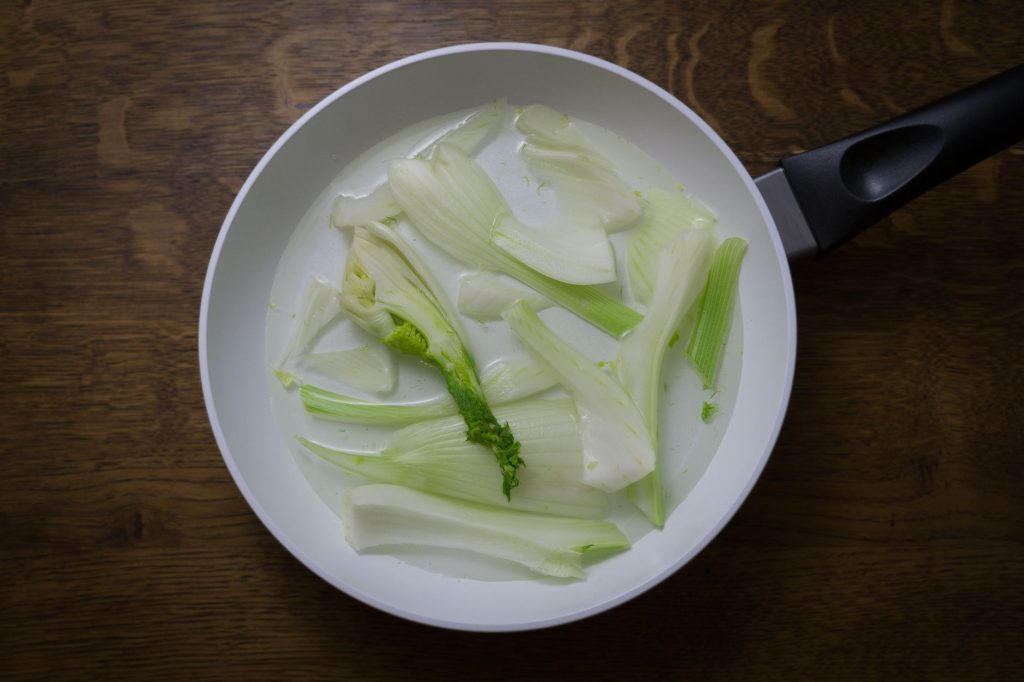
Cut fennel wedges that stay together
Trim off the stalks and save a small handful of the feathery fronds for serving. Peel away any tough or bruised outer layer. Shave just the dry surface from the root end, then set the bulb upright and halve it through the base. Lay each half flat and cut lengthwise into three or four wedges, aiming for about 1 inch [2.5 cm] at the widest point. Each wedge should have a sliver of core at the bottom to hold its layers together. If the bulb is especially wide, angle the knife toward the center of the base as you divide it.
Roast the pork, fennel, and apples
- Heat the oven and season the roast. Set a rack in the middle of the oven and heat it to 400°F [200°C]. Pat the pork dry with paper towels. Stir together 1 tablespoon of the oil, the mustard, garlic, thyme, 1 teaspoon of the salt, and 1/4 teaspoon of the pepper. Rub the mixture over the roast and set it fat side up in the center of the pan. Wash your hands and any utensils or work surfaces that touched the raw pork before handling the produce.
- Give the fennel a head start. Toss the wedges with 1 tablespoon of the oil, 1/4 teaspoon of the salt, and the remaining 1/4 teaspoon of pepper. Spread them around the pork with a cut side flat against the metal. Leave some open space for the apples and roast for 25 minutes. When you pull out the pan, the bottoms of the wedges should be starting to turn golden and the outer layers should be softening. Turn the wedges with a thin spatula, supporting them near the base if the layers are loose.
- Add the apples. While the pork and fennel roast, core each apple and cut it into eight wedges, keeping the peel on to help the pieces hold together. Toss them with the last tablespoon of oil and the remaining 1/4 teaspoon of salt. Set them in the open spaces on the hot pan with a cut side down. Keep the apples in a single layer so their surfaces brown where they touch the metal.
- Check the center of the roast. Start checking the pork about 20 minutes after adding the apples. Insert the thermometer from the side into the center of the thickest part. Once it reads 145°F [63°C], transfer the pork to a clean cutting board and let it rest for 10 minutes, including at least 3 minutes before carving. If it needs longer, check again in 5 minutes. The fennel is ready when a knife slips through the thick base and the edges are browned. The apples should give under a fork. Transfer either to a serving dish if it finishes before the pork. If the pork finishes first, leave the pan in the oven while the meat rests and check the wedges again after 5 minutes.
- Finish and carve. Sprinkle the vinegar over the hot fennel and apples, then scatter the reserved fronds over them. Slice the pork across the grain about 1/2 inch [1.3 cm] thick. Spoon the juices from the cutting board over the slices on the platter.
If the apple wedges are tender but still pale, give them a few more minutes cut side down while the pork rests. A little browning on one side is enough. Lift them with the spatula so the browned surface comes away with the fruit.
Bring it to the table
Mashed potatoes are handy if you want a soft, plain side for anyone trying fennel for the first time. You can also serve the roast with buttered egg noodles or a bowl of green beans. Put the pork, fennel, and apples on a platter in loose groups so everyone can take what they like. For smaller appetites, cut a slice of pork into strips and offer a wedge of apple alongside. A bite of both gives you the sweetness of the fruit and the tang of the mustard crust.
Save some for another dinner
Refrigerate leftovers within 2 hours in shallow, covered containers and use them within 3 to 4 days. Pack the pork with any carving juices and keep the fennel and apples in a separate container so you can warm each at its own pace. To reheat the pork, put slices in a covered skillet with a splash of water or broth and warm gently until they reach 165°F [74°C]. Warm the fennel and apples separately to the same temperature, turning them gently so the soft wedges stay whole.
For an easy lunch, layer thin slices of chilled pork on toast with mustard and a few pieces of roasted apple. For dinner, dice the leftover pork and stir it into a skillet of cooked potatoes and fennel. Add the apples toward the end of reheating so they keep a little texture, just as they did on the roasting pan.