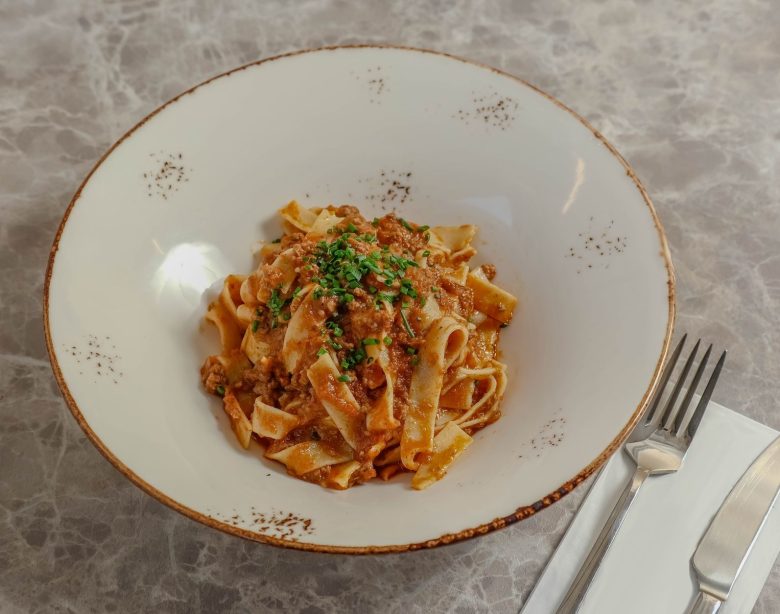
Pork shoulder and apple cider make a good Sunday dinner when you have time to let the oven do the work. The pork braises with onion, carrot, and thyme until you can pull it apart with two forks. Then the cider juices simmer on the stove, uncovered, until they’re concentrated enough to cling to wide noodles. A little cider vinegar at the end keeps the sauce bright, and Parmesan brings out the savory flavor of the browned pork.
This recipe serves six. Allow about 35 minutes to prep and brown the pork and vegetables, 2 1/2 to 3 hours for the braise, and about 20 to 30 minutes to finish the sauce and noodles. If dinner is on a weeknight, make the ragu a day ahead and boil the pasta while the sauce reheats.
Ingredients
For the pork and cider sauce
- 2 1/2 pounds [1.1 kg] boneless pork shoulder, sometimes labeled pork butt
- 1 1/2 teaspoons fine sea salt, plus more to taste
- 1/2 teaspoon ground black pepper
- 1 tablespoon [15 mL] olive oil
- 1 medium yellow onion, finely chopped (about 1 cup)
- 1 medium carrot, finely chopped (about 1/2 cup)
- 1 celery stalk, finely chopped (about 1/2 cup)
- 3 garlic cloves, minced
- 1 tablespoon tomato paste
- 1 1/2 cups [360 mL] fresh, nonalcoholic apple cider with no added sugar or spices
- 1 cup [240 mL] low-sodium chicken broth, plus more if needed
- 4 sprigs fresh thyme and 1 bay leaf
- 1 to 2 teaspoons apple cider vinegar
For the noodles
- 1 pound [450 g] dried pappardelle or wide egg noodles
- Salt for the pasta water
- 1/2 cup [45 g] finely grated Parmesan, plus more for the table if desired
- 2 tablespoons chopped flat-leaf parsley, optional
Choose a shoulder with some fat running through it. Trim away any thick, firm layer on the outside before cutting the meat, leaving the thinner seams in place. Take a sip of cider before measuring it. If it’s especially sweet, use 1 cup [240 mL] cider and 1 1/2 cups [360 mL] broth so the reduced sauce stays savory.
How to make pork and apple cider ragu
- Season and brown the pork. Heat the oven to 300°F [150°C] with a rack in the lower middle. Cut the pork into roughly 3-inch [8 cm] chunks, pat them dry, and season all over with the fine sea salt and pepper. Heat the oil in a 5- to 6-quart Dutch oven over medium-high heat. Brown the meat in two batches, turning with tongs when the underside releases easily. Aim for a deep brown crust on two or three sides, about 7 to 9 minutes per batch. Transfer the pork to a plate.
- Soften the vegetables and loosen the browned bits. Turn the heat down to medium. If there’s a deep pool of fat, carefully spoon off all but about a tablespoon. Add the onion, carrot, and celery and cook, stirring, for 7 to 9 minutes, until the onion is translucent and the vegetables are starting to soften. Stir in the garlic and tomato paste and cook for about a minute, until the paste darkens slightly. Pour in a splash of the measured cider and scrape the bottom of the pot with a wooden spoon. Add the rest of the cider, the broth, thyme, and bay leaf.
- Braise until the pork pulls apart. Return the pork and any juices on the plate to the pot. The liquid should come about halfway up the meat. Add a splash of broth if the level is low. Bring to a gentle simmer, cover tightly, and move the pot to the oven. Check at 2 1/2 hours. Slide a fork into the center of a thick piece and twist. If the meat holds together, cover and keep cooking, checking every 20 minutes. Add a splash of broth if the bottom is getting dry.
- Shred the pork and reduce the cider juices. Lift the meat into a bowl and discard the thyme stems and bay leaf. Let the liquid settle briefly, then skim off any obvious pools of fat. Simmer the juices and vegetables uncovered over medium to medium-high heat, stirring occasionally, for about 12 to 20 minutes. Aim for about 1 1/2 cups of sauce, with enough body to lightly coat the back of a spoon. Meanwhile, pull the pork into bite-size shreds with two forks, discarding any large pieces of soft fat. Stir the meat and 1 teaspoon of vinegar into the reduced sauce. Taste and add the second teaspoon if you’d like a sharper finish.
- Finish the noodles in the ragu. While the juices reduce, bring a large pot of salted water to a boil. Cook the noodles until they’re flexible with a little firmness in the center, about 1 minute shy of the package directions. Scoop out 1 cup [240 mL] of pasta water before draining. Add the noodles to the ragu with 1/4 cup [60 mL] of the reserved water and toss over low heat for 1 to 2 minutes. Add more pasta water a tablespoon at a time if the noodles look dry. Take the pot off the heat and toss with the Parmesan. Taste for salt and serve with parsley, if using.
If the sauce looks thin after you add the pork, simmer it uncovered for a few more minutes before the noodles go in. Drag a spoon across the bottom of the pot. When the juices flow back slowly, the sauce is ready. Add the first splash of pasta water gradually if the noodles are already carrying plenty of water from the colander.
At the table
Use tongs to divide the noodles among warm bowls, then spoon the pork left at the bottom of the pot over each serving. The shreds tend to slip out of the pasta as you lift it. If someone at the table likes plain noodles, pull a small portion from the pasta pot when it’s fully tender and offer a spoonful of pork on the side. A bowl of steamed green beans or a crisp cabbage salad gives the meal some crunch.
Make ahead and store
If you’re cooking ahead, finish reducing the sauce and stir in the shredded pork. Divide the ragu among shallow containers and refrigerate within 2 hours of cooking, or within 1 hour if the room is above 90°F [32°C]. Use refrigerated leftovers within 3 to 4 days. For best texture, freeze the sauce on its own for up to 3 months and thaw it overnight in the refrigerator.
To reheat, add a splash of broth or water to the ragu and stir as it warms. Bring the sauce to a boil and check that the pork reaches 165°F [74°C] throughout before tossing with freshly cooked noodles. If you’ve already mixed the sauce and noodles, store them together in a shallow container and follow the same chilling and reheating times and temperatures. A splash of water and a lid help loosen the noodles as they heat, and a gentle stir keeps the wide ribbons from tearing.