Chicken with Roasted Pepper Pan Sauce turns a jar of roasted red peppers into the sort of sauce you want to drag a piece of bread through. Blend the peppers with a little broth, then pour them into the skillet where the chicken browned. A splash of broth loosens the browned bits first, so the finished sauce tastes of both the sweet peppers and the chicken. A pat of butter gives it a glossy finish, and a squeeze of lemon keeps the sweetness in check.
This is a good dinner for a night when everyone wants something a little different on their plate. Spoon the sauce over slices of golden chicken or pass it in a small pitcher for anyone who likes to dip. Set rice or noodles on the table to catch the extra sauce and add whatever green vegetable is handy.
What you’ll need for four servings
Allow about 30 minutes with jarred peppers. A 12-inch [30 cm] skillet gives the chicken room to brown, and a blender makes quick work of the sauce. Use roasted red bell peppers for their sweet, mild flavor. Drain them before measuring so the packing liquid doesn’t dictate how salty or tangy your sauce will be.
- 1 1/2 pounds [680 g] boneless, skinless chicken breasts or thin chicken cutlets
- 1/2 teaspoon fine sea salt, plus more to taste
- 1/4 teaspoon ground black pepper
- 1 tablespoon [15 mL] olive oil, plus a little more if cooking in batches
- 1 cup [about 150 g] drained roasted red bell peppers
- 3/4 cup [180 mL] low-sodium chicken broth, divided, plus more as needed
- 1 small shallot, finely chopped
- 2 garlic cloves, minced
- 1 tablespoon [14 g] unsalted butter
- 1 to 2 teaspoons [5 to 10 mL] fresh lemon juice
- 2 tablespoons chopped flat-leaf parsley, optional
How to make chicken with roasted pepper pan sauce
- Blend the peppers. Put the drained peppers and 1/2 cup [120 mL] of the broth in a blender. Blend until smooth, scraping down the sides with the blender off if pieces of pepper cling to the jar. If the blades have trouble catching, add a tablespoon of extra broth. The puree should pour easily while still looking opaque and thick enough to coat a spoon. Keep it beside the stove and measure out the remaining 1/4 cup [60 mL] broth for the skillet.
- Get the chicken an even thickness. If you’re starting with thick breasts, lay each one flat and slice horizontally into two thinner pieces. If one end is still much thicker, gently pound it between sheets of parchment until each cutlet is about 1/2 inch [1.3 cm] thick. Pat both sides dry with paper towels and season them evenly with the salt and pepper. Have a clean plate ready for the cooked chicken.
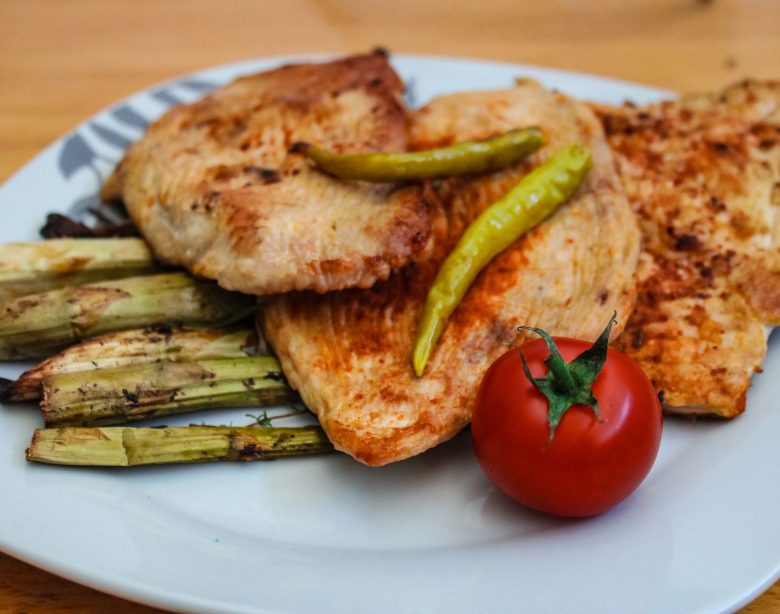
- Brown the cutlets. Heat the oil in the skillet over medium-high heat until it shimmers. Lay the cutlets in a single layer with a little space between them, working in batches if needed. Leave them in place for about 3 to 5 minutes, until the underside is golden and releases easily when you slip a spatula underneath. Flip and cook for another 2 to 4 minutes, checking early for thinner pieces. The chicken is done when an instant-read thermometer inserted sideways into the thickest part reaches 165°F [74°C]. Transfer each piece to the clean plate as it finishes. If a cutlet is browning quickly and still needs time inside, lower the heat.
- Loosen the browned bits. Turn the heat down to medium. If the skillet looks dry, add a small drizzle of oil. Stir in the shallot and cook for about 2 minutes, until softened, then stir in the garlic for about 30 seconds, until fragrant. Pour in the reserved 1/4 cup broth and scrape the bottom with a wooden spoon. The broth will bubble and pick up the savory brown bits. If the pan is still smoking before you add the shallot, take it off the burner briefly to cool.
- Simmer until pourable. Stir in the pepper puree and any juices from the plate of cooked chicken. Let the sauce bubble gently for 2 to 4 minutes, stirring so it doesn’t stick. Run a spoon across the pan. The sauce is ready when it briefly leaves a trail and then flows back into place. Take the skillet off the heat and stir in the butter and 1 teaspoon of lemon juice. Taste and add another teaspoon of lemon juice or a pinch of salt as needed. Spoon the sauce over the chicken and scatter parsley on top if using.
Adjust the sauce before it goes to the table
Peppers vary in how much liquid they hold, so use the spoon as your guide. If the sauce drops in clumps, stir in broth a tablespoon at a time until it falls in a steady ribbon. If it runs off the spoon like broth, simmer it uncovered a little longer before adding the butter. Taste after adjusting the thickness since reducing the sauce also concentrates the salt. When the peppers already taste tangy from the jar, start with a few drops of lemon and add more only if you want it.
If you have fresh bell peppers
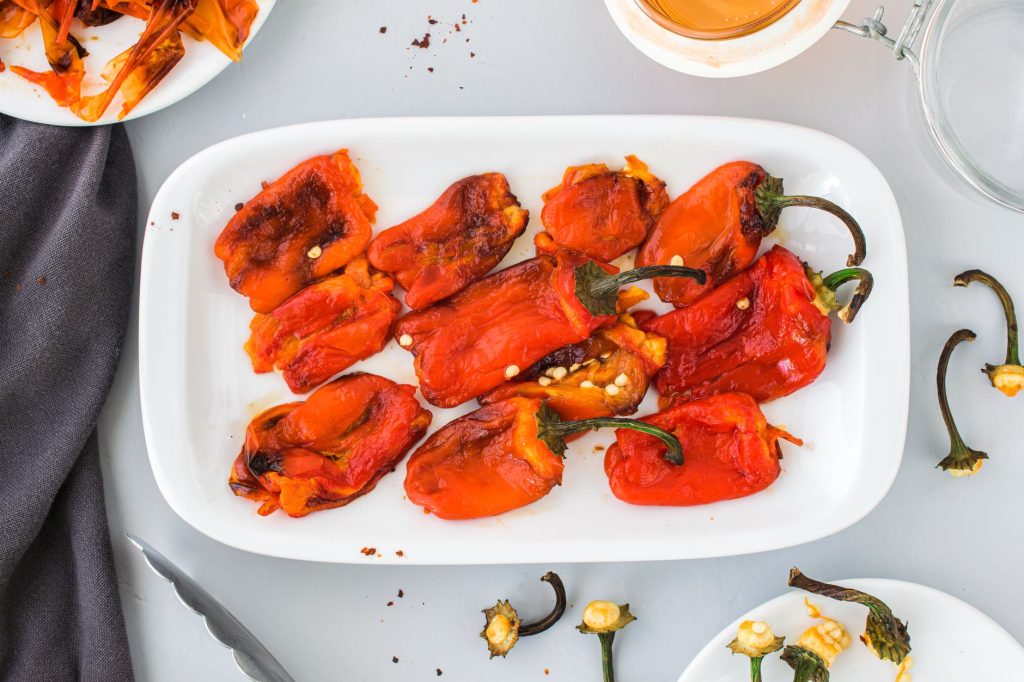
Halve and seed two large red bell peppers. Place them cut side down on a foil-lined, broiler-safe rimmed baking sheet. Broil about 6 inches [15 cm] from the heat, checking often, until the skins are blistered and blackened in patches, about 8 to 12 minutes. Transfer them to a heatproof bowl, cover with a plate, and let them steam for 10 minutes. Peel away the loosened skins and measure 1 cup of the soft flesh for the blender. Any extra strips are good tucked into a sandwich the next day.
Serving and saving the extras
For a weeknight meal, start the rice before heating the skillet, then warm frozen peas while the sauce simmers. Buttered egg noodles work especially well if you slice the chicken across the grain and lay the pieces right on top. If you serve the sauce separately, pour it into a small warmed bowl and give everyone a spoonful to start. It’s good on the vegetables, too.
Refrigerate the chicken and sauce in shallow, covered containers within 2 hours of cooking, or within 1 hour if the temperature is above 90°F [32°C]. Use refrigerated leftovers within 3 to 4 days. You can freeze the chicken with the sauce in individual portions for up to 2 months for best quality. Thaw overnight in the refrigerator. Reheat the chicken gently in a covered skillet with the sauce and a splash of broth until it reaches 165°F [74°C]. If the sauce separates after thawing, stir it well as it warms. For a second dinner, slice the warmed chicken over baked potatoes and spoon the sauce into the split centers.