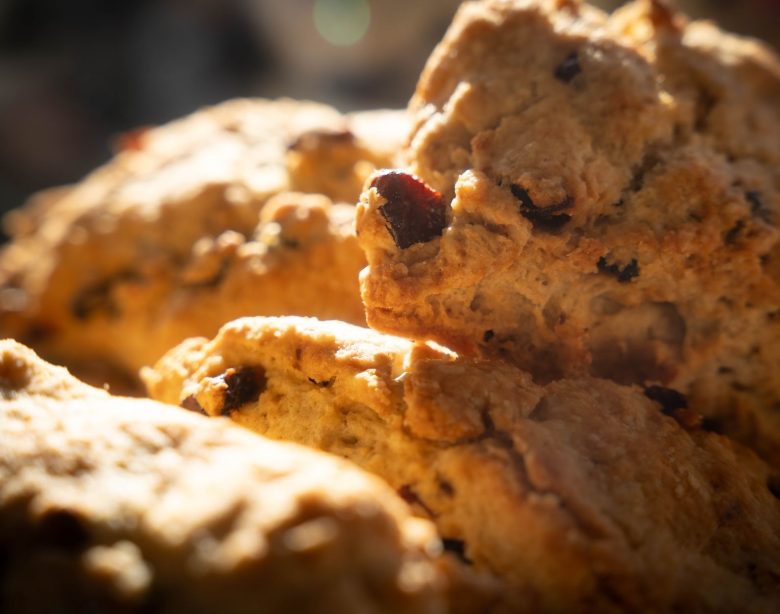
Orange cranberry scones reward the jobs kids are often eager to do themselves. They can pat the cold dough into a round, press a scraper through it to make wedges, and paint the baked scones with orange glaze. The edges turn golden in the oven, while the middles stay tender and studded with chewy cranberries. Set aside the orange after zesting it so you can squeeze it for the glaze.
Makes 8 scones. Plan on about 25 minutes to mix and shape the dough, 15 minutes to chill the wedges, and 18 to 22 minutes to bake. Give the scones time to cool completely before the brushes come out.
Ingredients
For the dough
- 2 cups all-purpose flour [240 g], plus more for shaping
- 1/3 cup granulated sugar [67 g]
- 1 tablespoon baking powder
- 1/2 teaspoon fine salt
- 1 tablespoon finely grated orange zest, from about 1 large orange
- 1/2 cup cold unsalted butter [113 g], cut into small cubes
- 3/4 cup dried cranberries [90 g]
- 1 large egg
- 1/2 cup cold heavy cream [120 mL], plus more if needed
- 1 teaspoon vanilla extract
For the glaze
- 3/4 cup powdered sugar [90 g]
- 1 to 2 tablespoons fresh orange juice [15 to 30 mL], from the zested orange
Mix and shape the scones
- Get set up. An adult preheats the oven to 400°F [200°C] with a rack in the middle. Line a baking sheet with parchment paper and clear a spot for it in the fridge. Leave the butter and cream chilled until you need them. Set out a deep mixing bowl so small hands have room to stir without sending flour over the sides.
- Rub the orange zest into the sugar. A grown-up grates the bright outer peel, turning the orange often to leave the white pith behind. Put the zest and sugar in the large bowl. Kids can rub them together with clean fingertips until the sugar looks a little damp and smells like orange. Whisk in the flour, baking powder, and salt.
- Pinch in the cold butter. Toss the cubes with the dry ingredients. Flatten and pinch them with your fingertips until most pieces are about the size of peas, with a few thin flakes mixed in. A child can pinch a few cubes while a grown-up turns the mixture over to uncover the larger pieces. If the butter starts feeling greasy, refrigerate the bowl for 10 minutes. Stir in the dried cranberries.
- Bring the dough together. In a small bowl, whisk the egg, cream, and vanilla. Pour the mixture over the flour and stir with a fork until large, shaggy clumps form. Squeeze a handful gently. If it holds together, it’s ready to shape. If the handful falls apart and dry flour still collects at the bottom of the bowl, add more cream a teaspoon at a time until the crumbs stick when pressed.
- Pat the dough into a round. Tip the dough onto a lightly floured surface. Gather loose bits toward the center, then let kids press down with flat palms and tuck in the edges. Aim for a round about 7 inches [18 cm] across and 1 inch [2.5 cm] thick. A few small cracks are fine. Pinch any deep splits together. If the dough gets sticky and hard to handle, chill the round on the lined sheet for 10 minutes before cutting.
- Cut eight wedges and chill. Lightly flour a plastic bench scraper. With an adult supervising, a child who can control the scraper can press straight down with both hands. Cut the round in half, cut across the halves to make quarters, then cut each quarter in two. An adult can make the cuts with a knife if you don’t have a scraper. Space the wedges about 2 inches [5 cm] apart on the lined baking sheet and refrigerate for 15 minutes.
- Bake until the edges are golden. Have a grown-up put the pan in the oven and bake the scones for 18 to 22 minutes. The tops should feel set in the middle and the bottoms should be lightly browned. Cool the scones on the pan for 5 minutes, then have an adult move them to a wire rack to cool completely.
Brush on the orange glaze
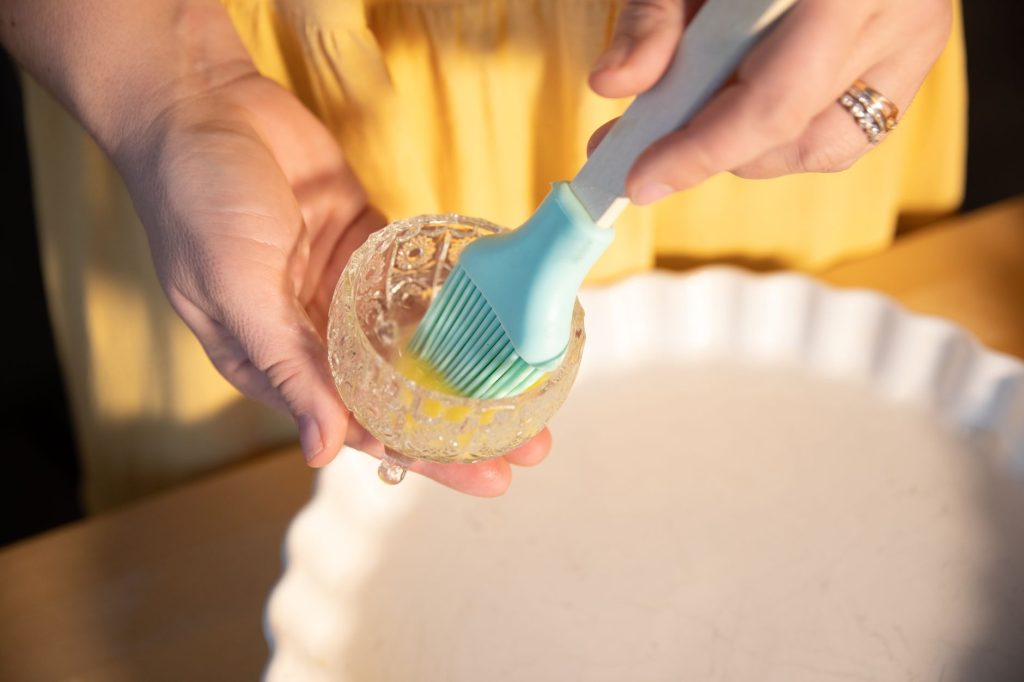
Stir 1 tablespoon of juice into the powdered sugar. Add more juice 1/2 teaspoon at a time until the glaze falls from the spoon in a thick ribbon. If it runs like juice, stir in a little more powdered sugar. Slide a plate or a piece of parchment under the cooling rack to catch drips. For a little baker who has trouble reaching across the rack, move one scone at a time to a plate.
Show kids how to dip the tips of a clean pastry brush into the glaze and tap the brush against the bowl before sweeping it across the top. A thin coat lets the golden ridges show through. If they want to paint a second layer, wait until the first coat looks dull. Leave the scones on the rack for about 15 minutes to let the glaze set before packing or stacking them.
Jobs for different ages
Set the bowl or dough at a height where your child can work comfortably with both feet steady. A preschooler can tip the measured cranberries into the bowl or pat the top of the round. An older child can measure the cream, check the width of the dough with a ruler, or set the baking timer. The dough comes together by hand, so a whisk and a fork are all you need for mixing. Save tasting for the baked scones and have everyone wash their hands after touching the raw dough.
The chill is a good time to scrape sticky dough bits off the work surface and wash the counter. You can also set out plates and give each child a spot for their finished scone. Once the glazing is done, soak the brush in warm soapy water so the sugar rinses out before it hardens between the bristles.
If some kids prefer their scones plain, let them choose which wedges to leave bare before the brush comes out. Serve the scones with a bowl of orange segments or alongside scrambled eggs. Split any plain scones while they’re still a little warm if you’d like to add butter.
Keep a few for later
Once the scones are cool and the glaze has set, keep them in an airtight container at room temperature for up to 2 days. Slip parchment between the layers if you stack them. For longer storage, set aside a few unglazed baked scones and freeze them in a freezer bag for up to 2 months. Thaw at room temperature, then warm them in a 300°F [150°C] oven for 5 to 8 minutes to crisp the edges. Let them cool again before brushing on glaze.