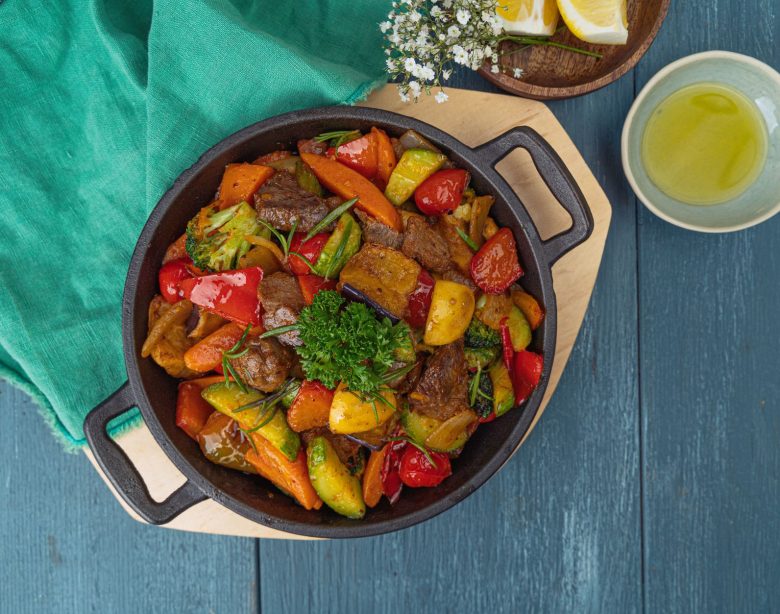
Sweet butternut squash and browned ground beef make a skillet dinner that feels right on a cool evening. The squash turns soft enough to cut with the side of a fork, and tomato paste and smoked paprika give the beef a savory coating. Set the skillet on the table with warm tortillas or spoon the beef and squash into bowls over rice.
The order matters. Brown the beef by itself and move it to a bowl. Give the squash time against the hot skillet, then cover it briefly with just enough broth to steam the centers. Once the lid comes off, let the remaining liquid cook away before folding the beef back in. You’ll be able to scoop up distinct pieces of squash and beef with a little seasoning clinging to each bite.
Beef and Butternut Squash Skillet Recipe
Serves 4. Allow about 40 minutes, including chopping. Use a 12-inch [30 cm] skillet with a lid, a sturdy spatula, and a bowl for the cooked beef. A wide pan gives both the beef and the squash room to make contact with the hot surface.
Ingredients
- 1 pound [450 g] ground beef
- 1 tablespoon [15 mL] olive oil, as needed
- 4 cups [about 560 g] peeled butternut squash, cut into 1/2-inch [1.3 cm] cubes
- 1 small yellow onion, diced, about 3/4 cup
- 2 garlic cloves, minced
- 1 tablespoon tomato paste
- 1 teaspoon smoked paprika
- 1/2 teaspoon ground cumin
- 3/4 teaspoon fine salt, divided, plus more to taste
- 1/4 teaspoon ground black pepper
- 1/4 cup [60 mL] low-sodium beef broth or water, plus a little more as needed
- 1 teaspoon apple cider vinegar
- 2 tablespoons chopped fresh parsley, optional
How to make it
- Prep the squash. If you’re starting with a whole squash, trim the ends, peel it, and separate the long neck from the bulb. Halve the bulb and scoop out the seeds. Lay the pieces flat on the cutting board, slice them into slabs, then cut the slabs into sticks and cubes. Aim for even pieces so they finish together. If you’re using precut squash, halve any large chunks and pat the cubes dry.
- Brown the beef. Heat the skillet over medium-high heat. Add a little of the olive oil if the beef is lean and the skillet is dry. Press the beef into a broad layer, sprinkle with 1/2 teaspoon of the salt and the black pepper, and leave it alone for about 3 minutes. When the underside has brown patches, turn it in sections and break it into bite-size crumbles. Cook for another 3 to 5 minutes, stirring occasionally, until the meat is browned and reaches 160 degrees F [71 degrees C]. Transfer to a clean bowl with a slotted spoon. Spoon off any excess fat, leaving a thin film in the skillet.
- Sear the squash and soften the onion. Keep the pan over medium-high heat and add enough of the remaining oil to coat the surface if needed. Spread the squash in a single layer and cook undisturbed for about 3 minutes. Stir and cook for another 2 minutes, until some of the flat sides have golden spots. Reduce the heat to medium, stir in the onion and remaining 1/4 teaspoon salt, and cook for 3 to 4 minutes, until the onion starts to look translucent.
- Season and cover. Clear a small space in the middle of the pan. Add the tomato paste, garlic, paprika, and cumin there and stir for about 30 seconds, until fragrant. Pour in the broth and scrape up the brown bits from the bottom. Cover and cook over medium-low heat for 4 to 6 minutes. Check a larger cube with a fork. The tines should slide in with a little resistance, and the cube should hold its shape.
- Uncover and finish. If the squash still has a firm center and the pan has dried out, add a tablespoon of water and cover for another minute or two. Once the squash is tender, remove the lid and cook over medium heat for 1 to 3 minutes, until a spatula drawn across the bottom leaves a track without liquid running into it. Fold in the beef and stir until hot. Take the skillet off the heat, add the vinegar, and taste for salt. Scatter parsley over the top if you’re using it.

Read the skillet as you cook
If the beef releases a pool of liquid, give it a little longer over medium-high heat before stirring again. Listen for the sound to change from a soft bubbling to a sharper sizzle as the moisture cooks away. If your skillet is smaller, brown the beef in two batches. The same approach works for the initial squash sear. Bring both batches of squash together when it’s time to add the onion.
Check the squash early if the cubes are on the small side. Once a fork goes in easily, take the lid off so steam can escape. If the squash is already as soft as you like and there’s still broth in the skillet, lift the cubes out with a slotted spoon and let the liquid bubble down on its own. Return the squash when you add the beef and fold everything together gently to keep the cubes intact.
Put dinner on the table
For rice bowls, start the rice before you heat the skillet. Add a dollop of plain yogurt to each bowl and put hot sauce on the table so everyone can season their own. For tacos, warm the tortillas while the squash steams, then add shredded cabbage for crunch. A side of steamed green beans or sliced apples works when you’re serving the skillet on its own.
For a bigger meal, warm a drained can of black beans separately with a pinch of cumin. Let everyone spoon beans into their own bowls, then top with the skillet mixture. If you have half a lime to use up, cut it into wedges and set them out for squeezing over the beef and squash.
Make ahead and store leftovers
For a head start, dice the squash and onion the day before and refrigerate them in separate covered containers. Pat the squash dry before it hits the skillet. You can also measure the paprika and cumin into a small bowl so they’re ready when the garlic goes in.
Divide leftovers into shallow covered containers and refrigerate within 2 hours, or within 1 hour if the room is above 90 degrees F [32 degrees C]. Use within 3 to 4 days or freeze in meal-size portions. Thaw frozen portions in the refrigerator. The squash will be softer after freezing and works well folded into a warm tortilla. Reheat leftovers to 165 degrees F [74 degrees C], stirring gently as they warm. If the mixture sticks to the skillet, add a teaspoon or two of water and let any excess evaporate before serving.