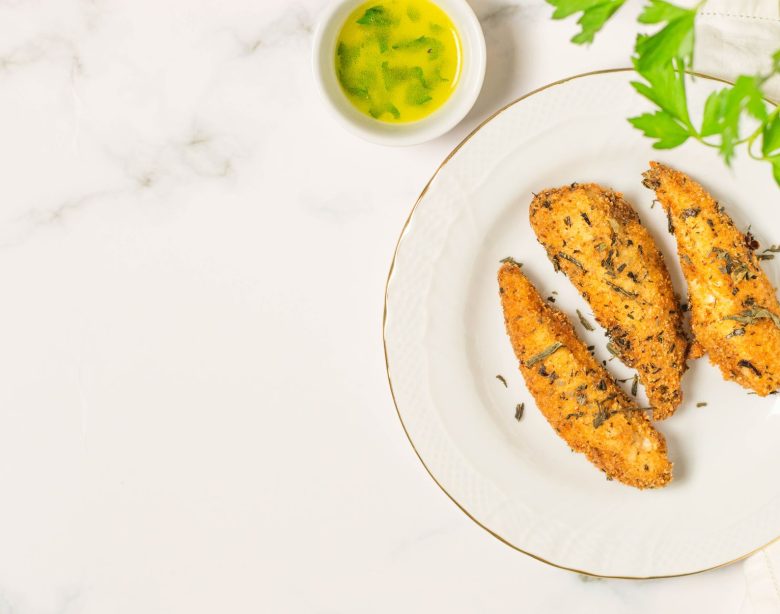
Chicken piccata comes together quickly once the cutlets are an even thickness. A few light taps with a meat mallet take care of the thick spots, so the chicken can brown in the skillet without the thin ends drying out. While the cutlets rest, simmer broth, lemon juice, and capers in the same skillet, then swirl in cold butter to make a sauce you can spoon over each piece. A pile of buttered green beans rounds out the plate.
This recipe serves four and takes about 35 minutes. Set out the broth, lemon juice, capers, and butter before you turn on the skillet. Once the chicken comes out, the sauce takes only a few minutes, and the beans can stay warm in their covered pot while you finish it.
Ingredients
For the chicken and quick caper sauce
- 2 large boneless, skinless chicken breasts, about 1 1/4 pounds [570 g] total
- 1/2 teaspoon fine sea salt
- 1/4 teaspoon ground black pepper
- 1/3 cup all-purpose flour [40 g]
- 2 tablespoons olive oil [30 mL], divided
- 3/4 cup low-sodium chicken broth [180 mL]
- 2 tablespoons fresh lemon juice [30 mL], from about 1 medium lemon
- 2 tablespoons drained capers, rinsed
- 3 tablespoons cold unsalted butter [42 g], cut into pieces
For the buttered green beans
- 1 pound fresh green beans [450 g], stem ends trimmed
- 1 tablespoon unsalted butter [14 g]
- 1/4 teaspoon fine sea salt, plus more to taste
How to make chicken piccata and buttered green beans
- Slice the breasts into cutlets. Fill a medium pot with about an inch of water and fit it with a steamer basket. Set it aside while you prep the chicken. Lay one breast flat on a cutting board. With your palm flat on top and your fingers clear of the blade, slice horizontally through the middle to make two pieces. Repeat with the second breast. If the knife starts angling up or down, pause and level it before you finish the cut.
- Flatten the thick spots. Put a cutlet between two sheets of parchment and tap it with the flat side of a meat mallet or the base of a small, sturdy skillet. Start at the thickest part and work outward, stopping when the cutlet is about 1/4 inch [6 mm] thick. Use light taps near the edges, where the meat tears more easily. Run your fingertips over the parchment to feel for any ridges. Repeat with the rest of the cutlets, then wash your hands and clean the board, knife, and mallet after handling the raw chicken.
- Steam and butter the beans. Bring the water to a boil, add the beans to the basket, and cover. Steam for 5 to 7 minutes, checking a bean at 5 minutes. It should be bright green and tender enough to bite through, with a little snap. Lift out the basket and pour the water out of the pot. Return the beans to the warm pot off the heat and toss with their tablespoon of butter and 1/4 teaspoon salt until glossy. Cover loosely to keep them warm.
- Flour and sear the cutlets. Pat the chicken dry and season both sides with the measured salt and pepper. Put the flour in a shallow dish. Heat 1 tablespoon of the oil in a large skillet over medium-high heat until it shimmers. Dip two cutlets in the flour, shake off the excess, and lay them in the skillet with space between them. Cook for 2 to 3 minutes per side, until golden and the thickest part of each cutlet reaches 165°F [74°C]. Slide an instant-read thermometer in from the side so the tip sits in the center. Transfer to a clean plate. Repeat with the remaining oil and cutlets, then discard the flour left in the dish.
- Simmer the caper sauce. Reduce the heat to medium. Pour in the broth and use a wooden spoon to scrape up the golden-brown bits stuck to the skillet. Stir in the lemon juice and capers, then simmer for 3 to 5 minutes, until the liquid has reduced to about 1/2 cup [120 mL]. Pour in any juices from the chicken plate and briefly bring the sauce back to a simmer. Take the skillet off the heat and swirl in the cold butter a few pieces at a time. The sauce should look glossy and lightly coat the back of a spoon. Taste before adding salt, since the capers may provide enough.
- Spoon the sauce over the chicken. Divide the beans and cutlets among four plates. Stir the sauce before spooning it so the capers don’t all end up on the last plate. Start with a spoonful over each cutlet and bring the rest to the table while it’s warm.
Small adjustments at the stove
If the flour darkens almost as soon as the chicken hits the skillet, turn the heat down a notch. Before adding the second batch, check the pan for loose, scorched flour. Scoop out any black bits with a spoon and leave the golden-brown bits stuck to the surface for the sauce. If the chicken looks pale at the first turn, check that the pan is still hot enough for the oil to sizzle gently around the edges.
Give the sauce a taste once the butter has melted. If the lemon is sharper than you like, stir in a tablespoon of warm broth. If the sauce looks oily, add a teaspoon of warm water and whisk it off the heat until it comes together. For anyone who wants to try the lemon butter without a whole bite of capers, spoon some sauce from the edge of the skillet and let them add capers at the table.
Rice or egg noodles can stretch the meal and catch the sauce that runs off the chicken. Get either one going before you start searing the cutlets. If you prefer bread, a slice of toast rubbed with a cut clove of garlic gives everyone something to swipe through the last drops on the plate.
Storing and reheating leftovers
Refrigerate the chicken, sauce, and beans in shallow, covered containers within two hours of cooking, or within one hour if the room is above 90°F [32°C]. Use them within three to four days. Store the sauce separately if you have a small container handy, so you can warm it gently while the cutlets heat through.
To reheat the chicken, put it in a skillet with a splash of broth, cover, and warm over medium-low heat until it reaches 165°F [74°C]. Reheat the beans to the same temperature with a splash of water to keep them from sticking. Heat the sauce separately, stirring and bringing it just to a boil before taking it off the heat. Stir it again and spoon it over the hot chicken. If you have only one cutlet left, slice it and serve it with the beans over warm rice, with the sauce drizzled over the whole bowl.