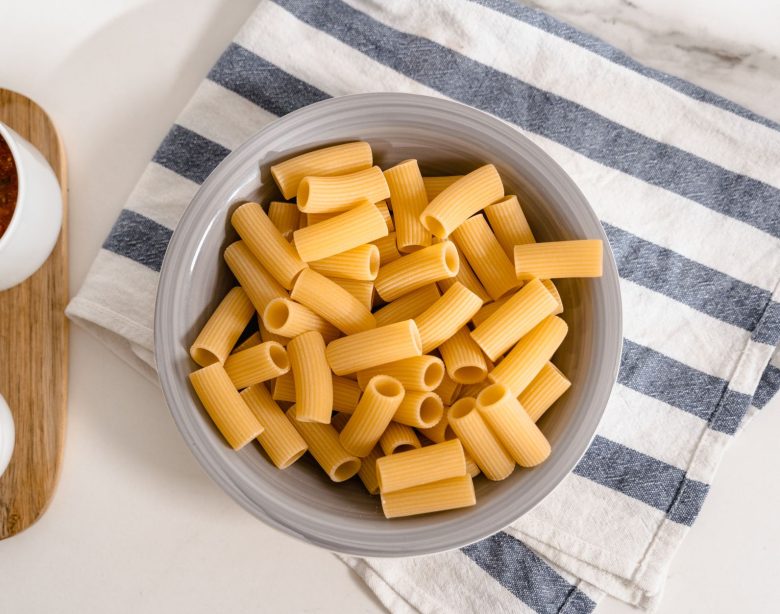
Baked rigatoni with spinach and sausage is the kind of dinner you can bring to the table right in its baking dish. The wide tubes catch little pieces of sausage, and chopped spinach folds into the tomato sauce without adding another pan. There are two small moves that make a big difference: drain the rigatoni while it still has a firm bite, then spoon sauce over the pasta along the edges of the dish. Those exposed ends are the first to dry out in the oven.
This recipe uses a full pound of pasta and fills a 9-by-13-inch baking dish. It serves 6 to 8, depending on what else is on the table. Allow about 1 hour, including 10 minutes for the casserole to settle before you scoop it. Start the sauce while the pasta water heats so the two are ready around the same time.
Ingredients
- 1 pound [450 g] dry rigatoni
- Kosher salt, for the pasta water and to taste
- 1 tablespoon [15 mL] olive oil, plus a little for the baking dish
- 1 pound [450 g] mild Italian pork sausage, casings removed if using links
- 1 small yellow onion, finely chopped (about 3/4 cup)
- 3 garlic cloves, minced
- 2 jars marinara sauce, 24 ounces [680 g] each
- 5 ounces [140 g] baby spinach, roughly chopped
- 2 cups [225 g] shredded low-moisture mozzarella, divided
- 1/2 cup [45 g] finely grated Parmesan, divided
Mild sausage seasons the whole pan with very little work. If some at the table want more heat, pass red pepper flakes with the Parmesan. Low-moisture mozzarella melts evenly and is easy to scatter into the corners. If you’re grating it from a block, use the large holes of a box grater.
How to make baked rigatoni
- Heat the oven and put the water on. Set a rack in the middle of the oven and heat it to 375°F [190°C]. Lightly oil a 9-by-13-inch [23-by-33-cm] baking dish, including the corners. Bring a large pot of water to a boil.
- Brown the sausage. Heat the tablespoon of olive oil in a deep skillet or Dutch oven over medium-high heat. Add the sausage and break it into small, bite-size crumbles with a wooden spoon. Let the pieces sit against the pan briefly between stirs so they develop browned spots. Cook for 6 to 8 minutes, until the sausage is browned and cooked through to 160°F [71°C]. If there is a pool of fat in the skillet, spoon it off, leaving enough to cook the onion.
- Build the sauce. Lower the heat to medium. Add the onion and stir for 4 to 5 minutes, until it softens and the edges look translucent. Stir in the garlic for about 30 seconds, until fragrant. Pour in both jars of marinara and scrape up the browned bits from the bottom. Bring to a gentle simmer and cook for about 5 minutes. Stir in the spinach a handful at a time and cook for another 1 to 2 minutes, until the leaves have wilted into the sauce. Taste and add salt if needed.
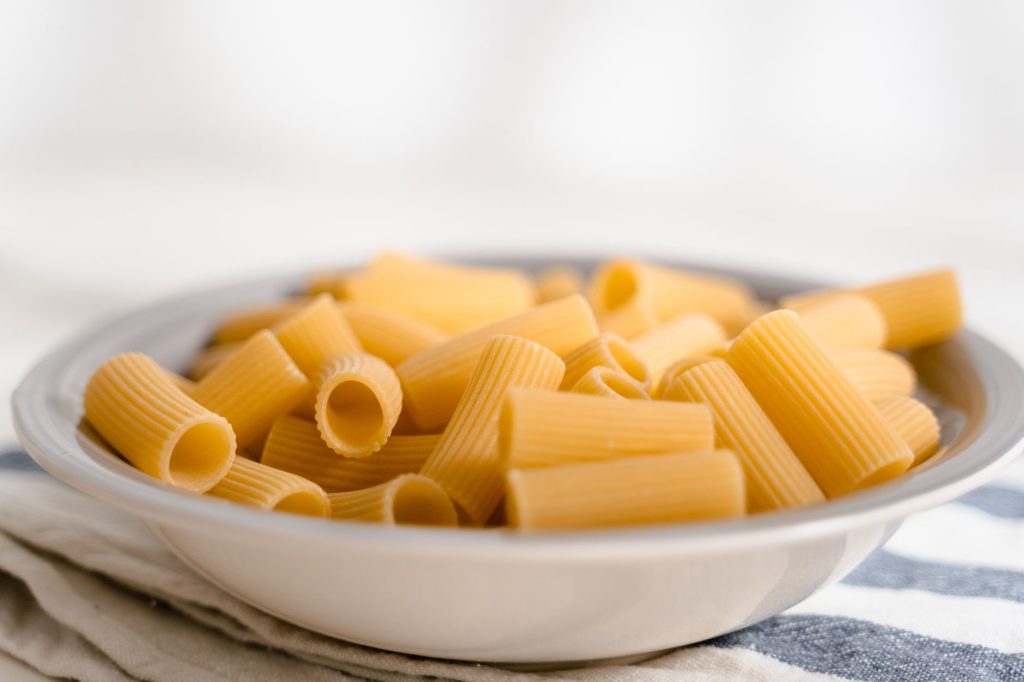
- Undercook the rigatoni slightly. Salt the boiling water, add the pasta, and stir well so pieces don’t stick together. Start tasting about 3 minutes before the package’s shortest suggested cooking time. Drain when the outside is pliable and the center gives a little resistance without a hard crunch. This is usually about 2 minutes early. Scoop out 1/2 cup [120 mL] of the cooking water before draining. If the sauce is thick enough to sit in mounds, stir in the reserved water a tablespoon at a time until it flows easily off a spoon.
- Assemble and cover the edges with sauce. Set aside 1 cup [240 mL] of the finished sauce. Toss the drained rigatoni with the rest of the sauce, 1 cup of the mozzarella, and half the Parmesan. Spread the mixture into the baking dish. Spoon the reserved sauce around the perimeter first, nudging any upright tubes down into it, then dab the rest over any bare spots in the middle. Scatter the remaining mozzarella and Parmesan over the top.
- Bake covered, then uncover to brown. Tent the dish with foil so it sits above the cheese and crimp it around the rim. Bake for 20 minutes. Lift the foil away from you to release the steam, then bake uncovered for 10 to 15 minutes more. Look for sauce bubbling at the edges and melted cheese with a few golden spots. Let the pan stand for 10 minutes so the sauce settles into the pasta and the servings hold together on a spoon.
What to look for before the pan goes in
Take a moment to look at the corners after you spoon on the reserved sauce. If you can see a row of pale tube ends along the rim, turn those pieces on their sides and spoon a little sauce over them. The foil traps steam during the first stretch of baking, and the sauce in direct contact with the pasta helps those edges stay tender after you uncover the dish.
If you’re working with a particularly thick marinara, loosen it while it’s still in the skillet. You want it to run into the openings of the rigatoni as you toss, with enough body to cling to the ridges. Add the pasta water in small splashes and wait until you’ve stirred each one in before deciding whether you need more.
At the table
A crisp green salad with a splash of vinegar is an easy side for the cheesy pasta. If you’re already opening the freezer for dinner, warm some peas or green beans while the casserole rests. For smaller appetites, scoop a little from the center, where the cheese is soft, and cut the tubes across with the side of a fork. The center also cools more quickly once you spread that small serving across a plate.
Make ahead and store leftovers
To get ahead by a day, make the sausage and spinach sauce, cool it promptly in shallow containers, and refrigerate it. Reheat it gently on the stove while you boil the rigatoni, then assemble and bake as directed. That leaves you with freshly cooked pasta and still saves the chopping and browning at dinnertime.
Refrigerate leftovers in shallow, covered containers within 2 hours and use within 3 to 4 days. For longer storage, freeze individual portions for up to 3 months for best quality and thaw them overnight in the refrigerator. Reheat to 165°F [74°C]. For a microwave portion, add a spoonful of water or marinara, cover loosely, and pause partway through to turn or stir the pasta so the center heats evenly. For several portions, put them in an oven-safe dish, add a little sauce along the edges, and cover with foil before warming in a 350°F [175°C] oven.