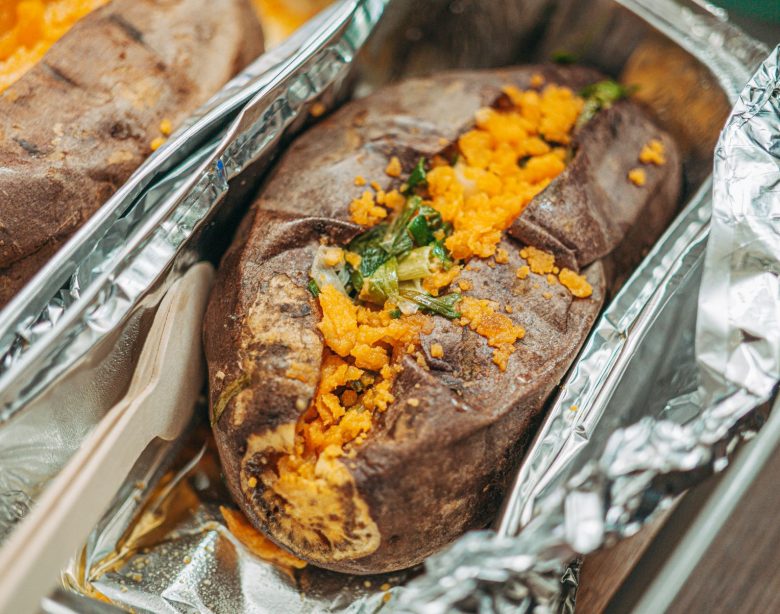
Split a hot baked russet and the fluffy middle is ready to soak up just about anything. Here it gets a skilletful of white beans and chopped kale, warmed with garlic and a splash of broth. Mash a few beans right in the pan and they make a light sauce that settles into the potato. A squeeze of lemon at the end gives the whole plate a lift.
Bake a few extra russets while the oven is on and you’ve got a head start on another meal. The four potatoes for dinner get the bean filling tonight, and the extras can go into tomorrow’s breakfast hash or back into the oven with whatever needs using up. If you’ve already cooked a pot of white beans, pull some from that batch. Two cans will do the job just as well.
What you’ll need
Serves 4. Allow about 1 hour to 1 hour 15 minutes, with about 20 minutes of hands-on work. Start the filling during the last stretch of baking so everything is hot when you sit down.
- 4 medium russet potatoes, about 8 ounces [225 g] each, plus any extras you’d like to bake
- 2 tablespoons [30 mL] olive oil, divided, plus a little more for any extra potatoes
- 1/2 teaspoon fine salt, divided, plus more to taste
- 4 garlic cloves, finely chopped
- 4 packed cups chopped kale leaves [about 120 g], tough stems removed
- 2 cans white beans, 15 ounces [425 g] each, drained and rinsed, or 3 cups [about 510 g] cooked and drained white beans
- 1/2 cup [120 mL] low-sodium vegetable broth or water, plus more as needed
- 1/4 teaspoon ground black pepper
- 1 tablespoon [15 mL] lemon juice, or 2 teaspoons cider vinegar
- 1/2 cup [about 55 g] shredded cheddar or 1/2 cup [120 g] plain yogurt, optional, for serving
Cannellini beans give the filling a particularly creamy texture, and great northern or navy beans work here too. If you’re using cooked beans from the freezer, thaw them in the refrigerator ahead of time and drain off any excess liquid. A little of the cooking liquid from homemade beans can stand in for part of the broth if you have it.
Bake the potatoes and warm the filling
- Get the russets in the oven. Heat the oven to 425°F [220°C] with a rack in the middle. Scrub the potatoes under running water, dry them well, and prick each one in several places with a fork. Rub the four dinner potatoes with 1 teaspoon of the oil and sprinkle them with 1/4 teaspoon of the salt. Lightly oil any extras and arrange all the potatoes on a rimmed baking sheet with a little space between them. Bake uncovered for 50 to 65 minutes. A thin knife should slide into the center without resistance and the skin should feel dry and crisp. If the potatoes vary in size, take the smaller ones out as they’re ready.
- Prep the kale while the potatoes bake. Strip the leaves from the tough stems, wash them well, and shake off the excess water. Chop the leaves into bite-size pieces so they’ll fit easily on a fork with the beans and potato. Drain and rinse the canned beans, chop the garlic, and set out the broth. Once the potatoes are nearly tender, start the skillet.
- Soften the kale in garlic oil. Heat the remaining 5 teaspoons oil in a large skillet over medium heat. Stir in the garlic for about 30 seconds, just until it smells fragrant. Add the kale, the remaining 1/4 teaspoon salt, and 2 tablespoons of the measured broth. Toss with tongs for 3 to 5 minutes, until the leaves turn bright green and soften enough to chew easily. If the skillet dries out before the kale is tender, add another splash of the measured broth.
- Simmer and mash the beans. Stir in the beans, black pepper, and the rest of the measured broth. Bring to a gentle simmer and cook for 4 to 6 minutes, stirring occasionally, until the beans are hot. Mash about half a cup of the beans against the side of the skillet with the back of a spoon, then stir them through. The liquid should coat the beans and leave a little sauce in the pan. If the mixture looks dry, stir in broth or water a tablespoon at a time. If it’s soupy, simmer it uncovered for another minute or two. Take it off the heat, stir in the lemon juice, and taste for salt.
- Open and fill the potatoes. Set each potato on a plate and cut a slit down the middle, leaving the bottom intact. Use a clean kitchen towel to hold the hot ends and gently squeeze them toward each other to open the potato, keeping your fingers clear of the steam. Fluff the flesh with a fork, then divide the beans and kale among the potatoes, spooning any sauce over the top. Add cheddar while the potatoes are piping hot so it begins to melt, or let everyone add their own spoonful of yogurt at the table.
Make the batch work for your family
One potato makes a generous serving. For smaller appetites, cut a potato in half and serve the beans alongside it so kids can scoop as much as they want. If some at the table are still getting used to kale, set a spoonful of plain beans aside before they go into the skillet. Warm those with a splash of broth in a small pan and serve with the fluffed potato and a little cheese.
If you have half a bag of baby spinach in the fridge, use it in place of the kale. Add it after the beans are hot and stir just until the leaves wilt. You can also stretch a smaller portion of leftover filling by spooning it over two potato halves and adding a side of whatever vegetables you have on hand. A handful of shredded cabbage dressed with lemon and salt gives the plate some crunch.
Store and reheat the extras
Refrigerate leftover potatoes and filling within 2 hours of cooking. Split the extra potatoes so heat can escape and store them in a shallow covered container. Keep the filling in a separate shallow covered container so you can warm it with a splash of water without softening the potato skins. Use both within 3 to 4 days and reheat leftovers to 165°F [74°C]. For crisp skins, warm the potato halves cut side up on a baking sheet at 400°F [200°C]. Stir the filling over medium heat in a small skillet, loosening it with water as needed.
For breakfast hash, dice a cold baked potato and brown it in a little oil. Leave the pieces undisturbed until the undersides are golden, then turn them and brown the other side. If it’s the filling you have left, simmer it with broth until it’s as loose as you like and serve it as a quick bean and kale soup with toast.