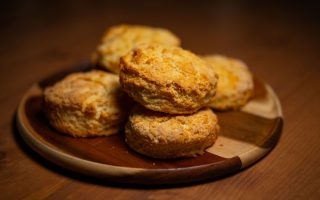
At the dinner table, these soft rolls look like a little pumpkin patch. Six snips around each dough ball make the ridges, and a piece of pretzel goes in after baking for the stem. Set out one dough ball as a practice pumpkin so kids can see where the snips go before they shape their own.
Pumpkin puree gives the dough a warm orange color and a mild flavor that goes with a pot of chili or a roast chicken. The rolls are savory enough to mop up soup, with just a little honey to round out the pumpkin. Allow about three hours from mixing to adding the stems, with most of that time spent waiting for the dough to rise and the rolls to cool.
What you’ll need for 12 rolls
- 1/2 cup warm whole milk [120 mL], about 100 to 110°F [38 to 43°C]
- 2 1/4 teaspoons instant yeast [7 g]
- 2 tablespoons honey [42 g]
- 3/4 cup plain pumpkin puree [185 g]
- 1 large egg
- 3 tablespoons unsalted butter [42 g], melted and cooled until just warm
- 1 1/4 teaspoons fine table salt [7 g]
- 3 1/2 cups all-purpose flour [420 g], spooned into the cups and leveled, plus a little for kneading if needed
- 1 teaspoon neutral oil for the rising bowl
- 1 tablespoon unsalted butter [14 g], melted, for brushing
- 6 thin pretzel sticks, each snapped in half
Use plain canned pumpkin puree. Pumpkin pie filling already contains sweetener and spices. Set out a large mixing bowl, a sturdy spoon, clean kitchen shears, and a parchment-lined baking sheet. A ruler laid beside the practice roll can help kids picture how far half an inch is.
Mix and knead the dough
- Make a shaggy dough. Stir the milk, yeast, honey, pumpkin, egg, and 3 tablespoons of melted butter together. Stir in the salt and 3 1/4 cups of the flour, holding back the remaining 1/4 cup. Keep stirring until the dry patches disappear and the dough gathers in a rough, sticky mass.
- Knead until springy. Turn the dough onto a lightly floured counter. Push it away with the heel of your hand, fold it back, and give it a quarter turn. Repeat for 8 to 10 minutes. If it keeps smearing on the counter after the first couple of minutes, add some reserved flour a tablespoon at a time. Stop adding flour when the dough lifts cleanly from the counter. It should feel soft and slightly tacky and hold its shape in a loose ball. If you use a stand mixer, have an adult knead with the dough hook on low until smooth and stop the mixer before anyone reaches into the bowl.
- Let it rise. Put the dough in the lightly oiled bowl, turn it once to coat it, and cover the bowl. Leave it in a comfortably warm spot until roughly doubled, about 60 to 90 minutes. Use the size of the dough as your cue. In a cool kitchen it may need longer.
Turn the dough balls into pumpkins
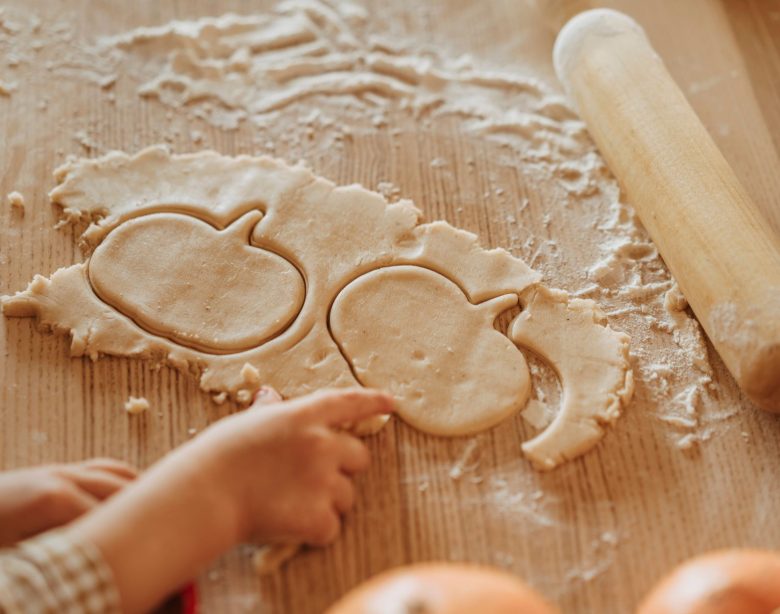
Gently press the air out of the risen dough and divide it into 12 pieces. Divide it in half, cut each half into three pieces, then halve those pieces. If you’re using a scale, aim for about 70 grams per roll. For each roll, pull the edges underneath and pinch them together. Set the ball seam side down and cup a hand around it, moving it in little circles to smooth the top. Arrange the balls about 2 inches apart on the baking sheet and gently flatten each to a squat dome.
Start with a clock face. Imagine the dough ball is a clock and make two snips at opposite edges, at 12 and 6. Then add two more snips along each side, spaced as evenly as you can. Point the shears toward the center and snip about 1/2 inch [1.3 cm] in from the outside edge each time. Cut through the dough at the edge and leave a wide, uncut center to hold the six sections together. If the shears drag, dust the blades lightly with flour.
Small hands can point to the cutting spots while a grown-up handles the shears. A child who can safely manage the shears can make the cuts with an adult beside them and their free hand out of the way. Give each pumpkin a gentle dip in the center with a floured fingertip. That dip will show where the stem belongs. If two sections come out uneven, leave them as they are. Cutting again can tear the soft dough.
Bake, then add the stems
Cover the shaped rolls loosely and let them rise for 30 to 45 minutes, until visibly puffy and a light touch on the side leaves an indent that springs back slowly. Toward the end of the rise, have an adult preheat the oven to 375°F [190°C]. If any of the cuts have closed, gently ease the edges apart with floured fingertips before the baking sheet goes in.
Bake on the middle rack for 16 to 21 minutes, until the tops are golden brown and the sides feel set. An adult should load and unload the oven, brush the warm tops with the remaining melted butter, and move the rolls to a wire rack. When the rolls are cool enough for kids to hold comfortably, have them press a pretzel half into the center of each one. If the crust resists, an adult can make a shallow starter hole with the tip of a small knife. Push each stem in just far enough to stand upright. For anyone who has trouble chewing hard pretzels, serve their roll with an empty dimple.
Give everybody a job
One child can spoon flour into the measuring cup while another levels it. If a child wants to knead but the full batch is hard to push, give them a small piece to fold and press, then knead it back into the batch before the first rise. While the dough rests, scrape dough bits off the counter before wiping it down so they don’t turn into paste. Wash hands after handling raw dough, and save the first taste for the baked rolls. While the rolls cool, kids can count out the stems and line them up beside the serving basket.
Save a few for tomorrow
Cool leftover rolls completely and keep them in an airtight bag at room temperature for up to two days. Pull the pretzels out before storing, since they soften against the bread. For longer storage, freeze the cooled rolls without stems in a freezer bag for up to two months. Thaw at room temperature, then warm them in a 300°F [150°C] oven for 5 to 8 minutes. Add fresh stems once the rolls are cool enough to handle.