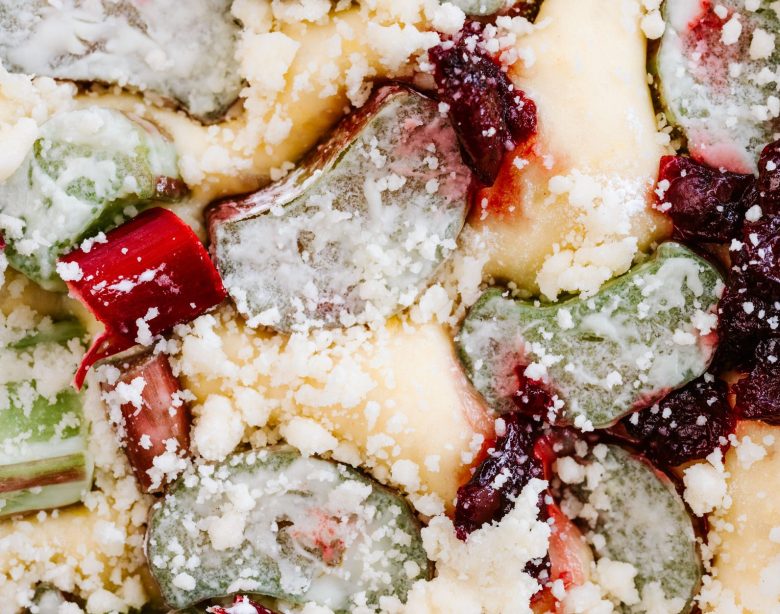
The first spoonful of this baked custard is mellow and fragrant with vanilla. Dig a little deeper and you’ll hit a soft, tart piece of rhubarb. A short roast gives the stalks a head start so they’re tender by the time the custard sets. The pieces hold their shape well enough for kids to scatter them across the bottoms of the ramekins before the custard goes in.
There’s no need to heat the milk before mixing, so kids can whisk the custard from start to finish at the counter. The adult takes over for the oven and the hot water bath. Make the custards earlier in the day if you want to serve them after dinner. A few hours in the fridge give them a cool, silky texture that pairs especially well with the bright fruit.
Rhubarb and Vanilla Baked Custard
Makes 6 individual custards. Set out six 6-ounce [180 mL] oven-safe ramekins, a rimmed baking sheet, and a deep roasting pan large enough to hold the ramekins without crowding. You’ll also need a whisk, a mixing bowl, a fine-mesh strainer, and a spouted measuring cup or pitcher. Check that the ramekins fit in the roasting pan before you start.
Ingredients
- 1 1/2 cups [about 180 g] fresh rhubarb stalks, cut into 1/2-inch [1.3 cm] pieces
- 2 tablespoons [25 g] granulated sugar, for the rhubarb
- 1 teaspoon [5 g] unsalted butter, for the ramekins
- 3 large eggs
- 1/3 cup [67 g] granulated sugar, for the custard
- 1 3/4 cups [415 mL] whole milk
- 1 1/2 teaspoons [7.5 mL] vanilla extract
- 1/8 teaspoon fine salt
Look for firm stalks and use either green or pink ones. The color will come through in the baked fruit, and both work here. Have an adult trim the ends and remove and discard any leaves before handing the stalks to a child to rinse. If a stalk is especially wide, split it lengthwise before slicing so the pieces cook at about the same rate.
Roast, whisk, and bake
- Give the rhubarb a quick roast. Heat the oven to 400°F [200°C]. Have a child toss the rhubarb with its 2 tablespoons of sugar in a bowl, then tip it onto a parchment-lined rimmed baking sheet and spread it out in a single layer. An adult roasts it for 8 to 12 minutes, until the pieces look glossy and the tip of a knife slips into one with a little resistance. Pull the tray before the pieces slump. Let the rhubarb cool on the tray until it’s safe to handle, and lower the oven to 325°F [165°C].
- Get the ramekins ready. Kids can rub a thin coat of butter around the inside of each ramekin with a scrap of clean paper towel. Set the cups in the roasting pan. Once the rhubarb is cool, let kids scatter the pieces evenly among the cups. A slotted spoon helps leave any pooled syrup on the tray. Save the syrup in a little dish if you’d like to spoon it over the baked custards.
- Whisk until smooth. Break each egg into a small bowl before adding it to the mixing bowl, so any shell is easy to spot and remove. Whisk the eggs, 1/3 cup sugar, and salt until the yolks and whites are blended. Pour in the milk gradually while whisking gently, then stir in the vanilla. Look for a smooth, pale yellow mixture with no streaks. Strain it into the pitcher to catch bits of egg white, then pour it evenly over the fruit. A child who can manage the pitcher can pour with an adult steadying it. Stop between cups to compare the fill levels and top up the ones that need a little more.
- Add the water bath and bake. The adult sets the roasting pan on a partly extended center oven rack and pours hot water from a kettle or heatproof pitcher into the pan until it reaches halfway up the sides of the ramekins. Aim between the cups to keep water out of the custard. Slide the rack in carefully. Start checking at 30 minutes and expect about 30 to 45 minutes total. The edges should look set, with a small wobble in the middle when an adult gently nudges a ramekin. A center that moves in waves needs more time. Check for 160°F [71°C] in the center with an instant-read thermometer, keeping the tip clear of the bottom.
- Cool and chill. An adult uses dry oven mitts and a firm grip to lift the ramekins out of the bath and onto a wire rack. Leave the roasting pan in the switched-off oven until the water is cool enough to handle. Let the custards cool on the rack for about 20 to 30 minutes, then refrigerate. Chill for at least 2 hours before serving. Cover the cups once cold so condensation is less likely to drip onto the custard.
If your oven runs hot, give it a few minutes to settle at the lower temperature while you fill the ramekins. The gentle heat helps the eggs set evenly. Ramekins that are wider and shallower may finish a little sooner, so check the smallest or shallowest cups first.
Give each helper a job
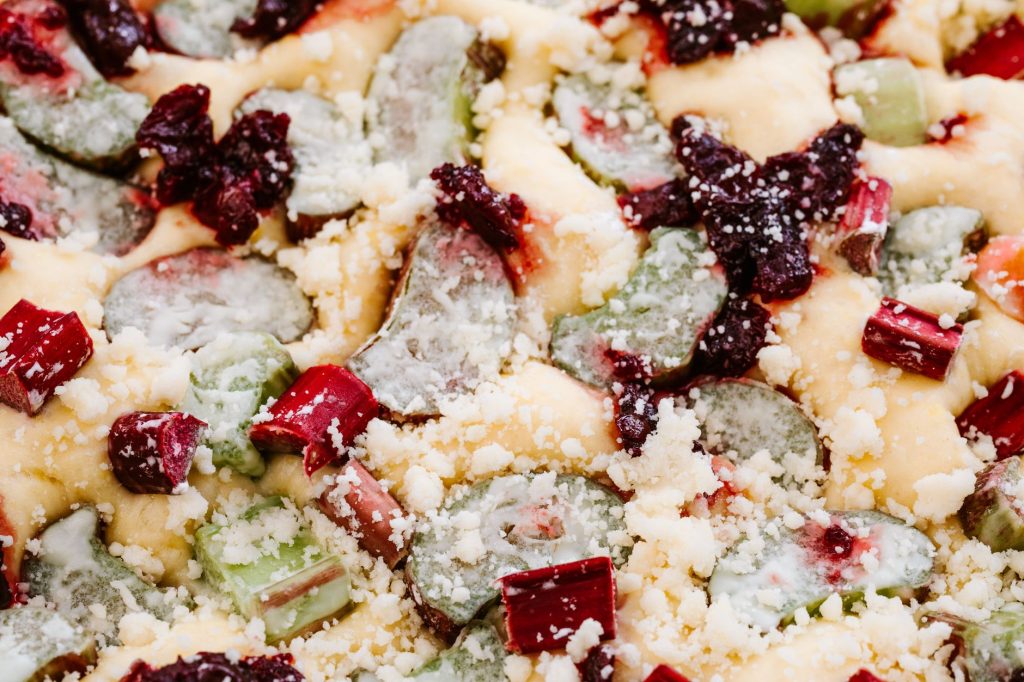
For a young helper, set the cool ramekins in a row and pass over a small bowl of cooled rhubarb. They can put one piece in each cup and go back along the row until the fruit is shared out. A more practiced helper can level the sugar, measure the vanilla over a spare bowl to catch drips, or whisk while you pour the milk. A damp kitchen towel under the mixing bowl keeps it from sliding. If two kids both want the whisk, let one blend the eggs and the other take over when the milk goes in.
A slow whisk is plenty here. If the mixture gets foamy, skim the foam off the top with a spoon before filling the cups for a smoother surface. Once the ramekins are filled, move the kids to the sink while the adult handles the oven. Have everyone who handled eggs wash their hands with soap and water, and wash the whisk, bowls, and any surfaces splashed with raw custard before setting out serving spoons.
Serving and keeping the custards
Serve the custards right in their ramekins. A little of the reserved syrup brings the rhubarb flavor to the top, or crumble a plain shortbread cookie over each cup just before serving for a bit of crunch. If you’re saving the syrup for later, cover and refrigerate it alongside the custards.
Refrigerate the custards within 2 hours of baking and keep them covered for up to 3 days. They make a good dessert to bake the day before since the cups can go straight from the fridge to the table. Keep any cookie topping separate until serving. The custard is best refrigerated because freezing and thawing can leave it watery.