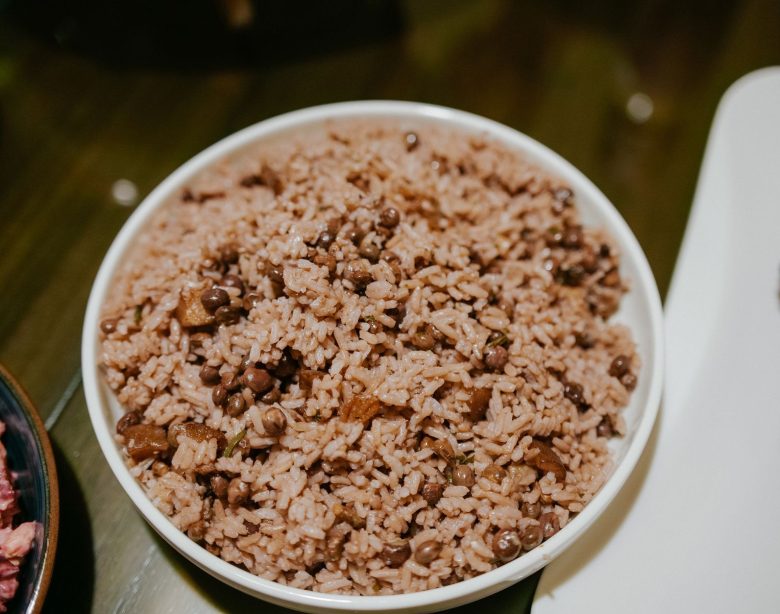
Red lentil and rice pilaf starts with two pantry staples and an onion. Fry the onion first so the oil picks up its sweetness, then use that same pot to toast the rice with cumin and garlic. The fried onions go back on at the table, where their browned edges stay crisp against the soft lentils and fluffy rice.
The trick is to give the rice a head start. Split red lentils soften quickly, so they go in after the rice has simmered for a few minutes. Some of the lentils will soften around the grains, and you’ll still see little flecks of orange when you fluff the pot. Serve it in bowls with yogurt and a squeeze of lemon, or spoon it alongside whatever vegetables you have to use up.
What you’ll need
This makes 4 main-dish servings or about 6 side servings. Allow about 40 minutes, including time to brown the onion and let the pilaf rest. Use a heavy 3-quart saucepan with a tight lid and a fine-mesh strainer. Have a paper towel-lined plate ready before you heat the oil.
- 1 cup [185 g] long-grain white rice, such as basmati
- 1/2 cup [95 g] dried split red lentils
- 1 large yellow onion, about 8 ounces [225 g] before peeling
- 3 tablespoons [45 mL] neutral oil, such as canola
- 2 medium garlic cloves, minced
- 1 teaspoon ground cumin
- 1/4 teaspoon ground black pepper
- 3/4 teaspoon fine salt, plus more to taste
- 2 1/4 cups [530 mL] water
- 1/2 lemon, cut into wedges, optional
- Plain yogurt or chopped parsley, optional for serving
How to make red lentil and rice pilaf
- Rinse the rice and lentils separately. Swish the rice in a bowl of cool water, drain it through the strainer, and repeat until the water is mostly clear. Set the rice aside to drain well. Pick through the lentils for any small stones, then rinse them in the strainer under cool running water and drain. Keep them in a separate bowl so you can tip them into the pot quickly later.
- Fry the onion. Halve the onion through the root, peel it, and slice it into thin half-moons about 1/8 inch [3 mm] thick. Heat the oil in the saucepan over medium heat until it shimmers. Add the onion and cook for 12 to 16 minutes, stirring often and separating any clumps. The slices will soften first, then turn golden at the edges. Stir more frequently toward the end and lower the heat if the thinnest slices are browning too fast. Lift the onion out with a slotted spoon when most of it is deep golden. Spread it on the prepared plate and leave the oil in the pot.
- Toast the rice. Return the pan to medium heat. Add the drained rice and stir for 1 to 2 minutes, until the grains look glossy and move easily around the pan. Add the garlic, cumin, and pepper. Stir for about 30 seconds, just until you can smell the garlic and cumin. Pour in the water, add the salt, and scrape up the browned onion bits with a wooden spoon.
- Give the rice a head start. Bring the water to a boil, then cover the pan and turn the heat to low. Simmer gently for 6 minutes. You should hear a faint bubbling under the lid. If steam is escaping in a steady rush, turn the burner down a little more.
- Add the lentils. Uncover the pot and scatter the drained lentils evenly across the rice. Stir gently once so they’re in the liquid. Cover again promptly and simmer on low for 10 to 12 minutes. Check at 10 minutes. The liquid should be absorbed, and both the rice and lentils should be tender when you taste a few grains and a few lentils from the center. If you see a little water between the grains and they still feel firm, cover and cook for another 2 minutes before checking again.
- Rest and finish. Take the pan off the heat and leave it covered for 5 minutes. Fluff with a fork, lifting from the edges toward the middle. Taste and add a pinch of salt if needed. Spoon into bowls and scatter the fried onions over each portion just before serving. Set out the lemon wedges and yogurt or parsley if you’re using them.
Getting the texture right
If the pot looks dry and the rice still has a firm center, drizzle 2 tablespoons [30 mL] of hot water around the edge. Cover and cook on low for 2 to 3 minutes, then check again. If everything is tender but a little water remains, cook uncovered on low for a minute or two before resting the pilaf. Keep the spoon out of the pot at this stage so the swollen grains stay intact.
Drain the rinsed rice well before toasting it, and let the onions cool in a loose layer so steam can escape. If your saucepan is narrow and the onions pile up, fry them in two batches, splitting the oil between them. The onions continue to darken a little after they leave the pot, so pull out any thin pieces that turn deep golden early. Choose split red lentils for this timing. Whole lentils and brown rice need longer to soften.
Make it dinner with what you have
For a family meal, try bowls of pilaf with a spoonful of plain yogurt and shredded cabbage tossed with lemon and a pinch of salt. Carrots cut into sticks or warmed frozen peas work just as well. Serve the onions and lemon at the table so everyone can choose how much crunch and tang to add. If you have an open tub of yogurt, stir a little cumin and salt into it before passing it around.
Stretch a smaller amount of pilaf by serving it under leftover roasted vegetables or with an egg on top. If there’s a cup left after dinner, stir it into a pot of vegetable soup near the end of cooking. The rice will soak up some broth as it warms, so keep a little extra water or broth handy if you like a looser soup.
Store and reheat leftovers
Divide leftover pilaf among shallow containers and refrigerate within 2 hours of cooking, or within 1 hour if the air temperature is above 90 degrees F [32 degrees C]. Use refrigerated portions within 3 to 4 days or freeze them. Pack any remaining onions in a separate container in the refrigerator. They’ll soften in storage, but a brief warm-up in a dry skillet can bring back some crispness.
Reheat only the portion you plan to serve. Add a tablespoon [15 mL] of water per cup of pilaf, cover, and warm over low heat on the stove or in the microwave. Stir partway through and heat to 165 degrees F [74 degrees C] throughout. Add the onions after reheating so they keep their texture.