Orange Glazed Oat Squares give kids two jobs they can see all the way through. First they pat a soft, buttery oat dough into a pan, filling the corners with their fingertips. Later, when the baked squares are cool, they drag a spoonful of orange glaze back and forth and watch the ribbons settle. The squares have a chewy middle and lightly crisp edges, with orange zest in the dough and fresh juice in the glaze.
The dough comes together with a whisk and a sturdy spoon, so siblings can trade off stirring without having to take turns at a mixer. Plan on about 20 minutes to put the pan together, 22 to 27 minutes to bake, and about an hour for cooling. An 8-inch square pan makes 16 small squares.
What you’ll need
For the oat squares
- 1/2 cup unsalted butter [113 g], melted and cooled until just warm
- 1/2 cup packed light brown sugar [105 g]
- 1 tablespoon finely grated orange zest, from about 1 large orange
- 1 large egg
- 1 teaspoon vanilla extract [5 mL]
- 3/4 cup all-purpose flour [90 g]
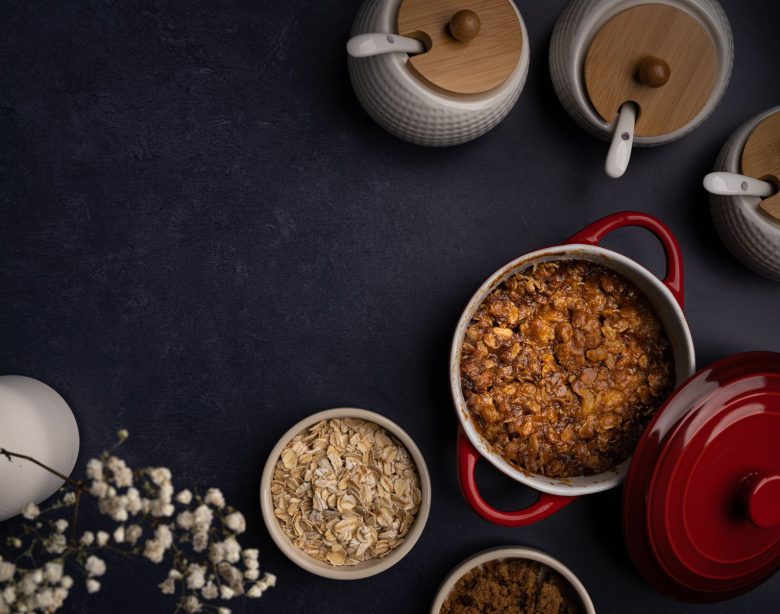
- 1 1/2 cups old-fashioned rolled oats [120 g]
- 1/2 teaspoon baking powder
- 1/4 teaspoon fine salt
For the orange glaze
- 3/4 cup powdered sugar [90 g]
- 1 to 1 1/2 tablespoons fresh orange juice [15 to 22 mL]
Wash and dry the orange, then grate the zest before cutting and juicing it. Slide the orange across the grater just until you see the white pith underneath, then turn the fruit to a fresh spot. The colored peel gives the dough its orange flavor. Juice the orange into a small cup and pick out any seeds before measuring. Rolled oats give the squares their chewy flakes. Save steel-cut oats for another recipe, since they’ll stay hard in this dough.

Mix, press, and bake
- Get the pan ready. Have an adult set a rack in the middle of the oven and preheat it to 350 degrees F [175 degrees C]. Line an 8-inch [20 cm] square metal pan with parchment, leaving enough overhang on two opposite sides to lift out the cooled slab. A little butter under the parchment will keep it from skidding when kids press the dough.
- Mix the wet ingredients. Put the brown sugar and zest in a large bowl. Have a helper rub them together with clean fingertips until the sugar smells like orange and feels a little damp. Whisk in the melted butter, then the egg and vanilla. The mixture should look glossy and fairly smooth, with a few specks of zest.
- Stir in the dry ingredients. In a second bowl, whisk the flour, oats, baking powder, and salt. Spoon the flour into the measuring cup and level it off if you’re using cups. Tip the dry ingredients into the butter mixture and stir with a wooden spoon, scraping across the bottom so no flour hides there. Stop when the dough is evenly moistened. It should be thick and sticky enough to hold together in a mound.
- Press the dough into the pan. Drop spoonfuls around the pan so there are small mounds near the corners as well as in the center. Have kids flatten them with the back of a spoon or clean fingertips. If the dough clings, put a small scrap of parchment over it and press through the paper. Peel away the scrap and check that the center and edges are about the same thickness.
- Bake and cool. An adult should put the pan in the oven and take it out. Start checking at 22 minutes. The edges should be golden brown and the center should look set and matte, with no wet patches. Move the pan to a wire rack and let it cool completely in the pan. Once the bottom of the pan feels room temperature, lift the slab by the parchment handles and set it on a cutting board. Have an adult cut it into four rows in each direction with a sharp knife.
If you’re baking with several helpers, give each one a corner to press and let them meet in the middle. Look across the pan at counter level to spot any ridges, then smooth them with the back of the spoon. If you’re baking around nap time or another activity, you can cool the slab and cover it for a few hours, then cut and glaze it when everyone is back at the counter.
Let kids drizzle the glaze
Spread the squares out on the parchment so there’s a little room between them. Stir 1 tablespoon of the orange juice into the powdered sugar, pressing any little sugar lumps against the side of the bowl. Lift the spoon and see how the glaze falls. It should come off in a thin ribbon that holds its shape briefly on the surface. If it drops in clumps, stir in more juice a few drops at a time, up to the remaining 1/2 tablespoon. If it runs like juice, add powdered sugar a spoonful at a time until it thickens.
Have kids practice one stripe on the parchment before moving over to the squares. A teaspoon is easy to hold, and filling it only halfway keeps the first stripe from turning into a puddle. Slow passes make thicker lines, while quick passes make fine ones. Leave the squares out for about 20 to 30 minutes, until the glaze feels dry to a light touch, before packing them up.
Give each helper a job
Set the mixing bowl on a damp kitchen towel if it tends to spin. Younger helpers can pour in premeasured oats and press the middle of the dough, where they have plenty of room. Kids who are ready to measure can level the flour or crack the egg into a separate cup so you can catch bits of shell. An adult can handle the grater and knife or guide an older child who’s ready to learn. Keep the hot pan on a back counter away from reaching hands.
Have everyone wash their hands after handling the egg or raw dough, and save tasting for the baked squares. While the pan cools, scrape the mixing bowls into the trash and put the spoons in warm soapy water before the dough dries on them. The parchment under the squares catches the glaze drips and can be folded up when everyone is done decorating.
Pack some for later
Once the glaze has set, keep the squares in an airtight container at room temperature for up to 3 days. Slide parchment between layers so the glaze stays on the squares when you lift them out. For a longer stash, freeze unglazed squares in a freezer container with parchment between layers for up to 2 months. Let them thaw at room temperature, then stir together a little glaze and hand the spoon back to the kids.