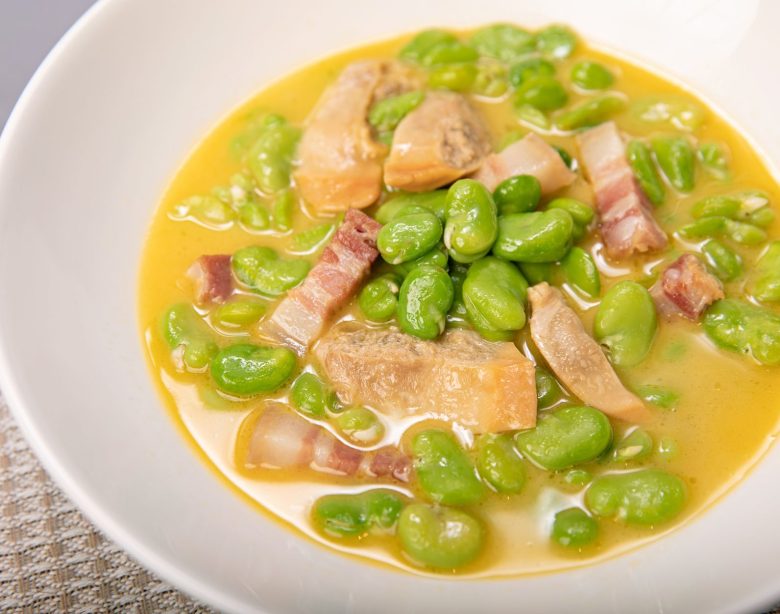
A cup of chopped ham can season a whole skillet of white beans and winter greens. Give the ham a few minutes in a hot pan and the edges turn golden, leaving browned bits that flavor the broth. Then simmer the beans just long enough to soften the kale and make a little sauce. It’s the kind of dinner you can scoop into shallow bowls with toast on the side, or spoon over the last of a pot of rice.
Great Northern beans are mild and hold their shape when stirred. Cannellini beans are larger and especially good if you like a creamy center. Either way, mash a spoonful or two against the side of the pan. The crushed beans thicken the broth just enough to carry the garlic and ham into every bite.
Serves 4. Allow about 30 minutes, including chopping. Use a deep 12-inch [30 cm] skillet with a lid.
Ingredients
- 1 tablespoon [15 mL] olive oil, plus a little more if needed
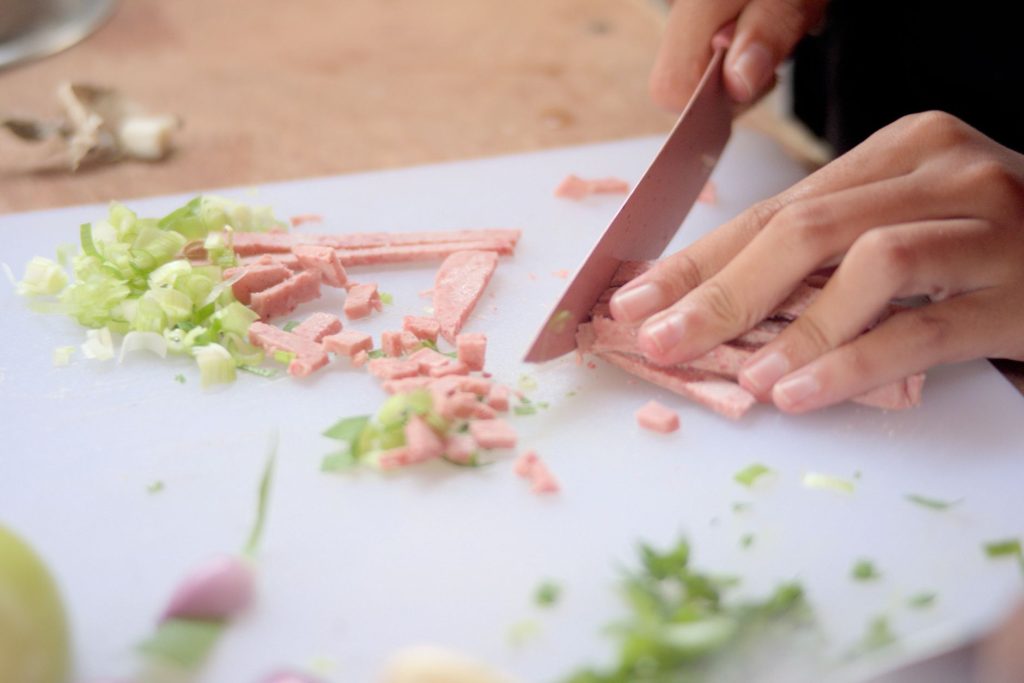
- 1 cup [about 150 g] chopped fully cooked leftover ham, cut into roughly 1/2-inch [1 cm] pieces
- 1 small yellow onion, finely chopped, about 3/4 cup
- 2 garlic cloves, minced
- 1/4 teaspoon dried thyme
- 1/4 teaspoon ground black pepper, plus more to taste
- 2 cans white beans, 15 ounces [425 g] each, drained and rinsed, or 3 cups cooked and drained white beans
- 3/4 cup [180 mL] unsalted or low-sodium chicken broth, plus more as needed
- 4 packed cups [about 120 g] chopped kale leaves, tough stems removed
- 2 teaspoons [10 mL] cider vinegar, plus more to taste
- Fine salt, to taste
Brown the ham, then build the skillet
- Dry the ham and prep the greens. Blot the ham with a paper towel, especially if it’s damp from the refrigerator. Wash the kale, shake off the water, and pull the leaves from the tough ribs. Chop the leaves into bite-size pieces so they’re easy to scoop up with the beans.
- Give the ham time to brown. Heat the oil over medium-high heat until it shimmers. Spread the ham in one layer and leave it alone for about 2 minutes. Stir and cook for another 1 to 2 minutes, until several sides have golden patches. Transfer the ham to a plate and leave the browned bits in the pan. If the ham has a sweet glaze, use medium heat and check the underside a little sooner.
- Soften the onion. Reduce the heat to medium. If the skillet looks dry, add a teaspoon of oil. Cook the onion for 4 to 5 minutes, stirring occasionally, until it’s soft and translucent at the edges. Add the garlic, thyme, and black pepper and stir for about 30 seconds, until you can smell the garlic.
- Scrape up the browned bits. Pour in the broth and run a wooden spoon across the bottom of the pan. Add the beans and the ham, including any juices on the plate. Bring to a gentle simmer. Crush about 1/4 cup of the beans against the side of the pan, then stir them into the broth.
- Wilt the kale. Add the leaves by the handful, folding each batch into the beans so there’s room for the next. Cover and simmer for 3 to 5 minutes, stirring halfway through. The kale should be dark green and tender enough to bite through easily. Continue cooking as needed until the mixture reaches 165°F [74°C] throughout. If the pan starts to look dry before the greens soften, add broth or water a tablespoon at a time.
- Finish with vinegar. The broth should lightly coat a spoon and leave a little sauce at the bottom of the pan. If there’s more liquid than you’d like, simmer uncovered for another minute or two. Take the skillet off the heat, stir in the vinegar, and taste a spoonful with both beans and ham before adding salt. A few more drops of vinegar can brighten a particularly smoky or sweet ham.
Use the beans and greens you have
If you cook dried beans for another meal, set aside 3 cups of the cooked beans for this skillet. Great Northern or navy beans should be tender all the way through before they go into the pan. The short simmer is just enough for them to take on the flavor of the broth. If you saved some mild, lightly salted bean cooking liquid, use it in place of some or all of the broth. It can be quite thick once chilled, so stir it in and judge the consistency after it warms up.
Chard works well in place of kale. Chop the stems and soften them with the onion, then add the chopped leaves for the last couple of minutes. For green cabbage, thinly slice about 3 cups and add it just after the onion softens. Cook it for about 3 minutes before adding the garlic, then let it finish simmering with the beans. It’s ready when the shreds are flexible and tender at the thicker ends.
If you have only half a cup of ham, dice it a little smaller so it reaches more spoonfuls. A finely chopped carrot cooked with the onion adds some bulk and sweetness. For a bigger appetite, serve the skillet over a split baked potato. Press the potato open with a fork first so the broth has somewhere to go. Toast is handy when you want something crisp alongside the soft beans.
For bowls with different tastes at the table, keep the skillet mild and put any extra seasoning out with dinner. A spoonful of plain yogurt can soften the bite of the vinegar, and a pinch of crushed red pepper gives grown-ups an easy way to add heat. If you’re serving it with rice, spoon the broth over the rice first, then pile on the beans and greens so the grains have a chance to soak it up.
Save a portion for another meal
Start with cooked ham that’s still within its recommended refrigerator storage time. Divide any extra skillet mixture into shallow containers and refrigerate within 2 hours of cooking, or within 1 hour if the room is above 90°F [32°C]. Use refrigerated portions within 3 to 4 days, counting from when the ham was first cooked or served, or freeze portions promptly if you need more time. Leave a little headspace in freezer containers and thaw in the refrigerator.
The beans soak up broth as they sit. To reheat a portion on the stove, add a splash of water, cover, and heat over medium-low, stirring occasionally. For the microwave, cover loosely and stir halfway through. Reheat to 165°F [74°C] throughout. If you’re packing lunch, you can add enough broth to turn a scoop into soup as it reheats. A pinch of pepper or a small splash of cider vinegar freshens the bowl just before eating.