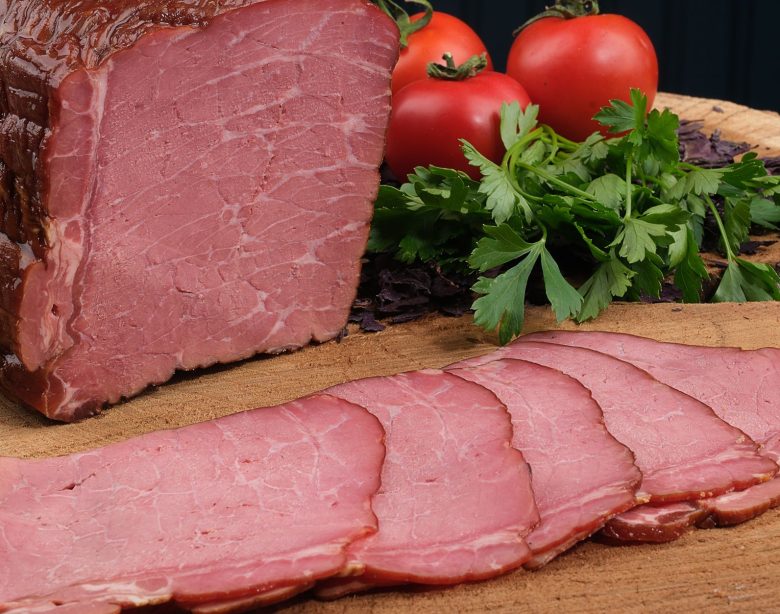
Lemon and rosemary give a Sunday beef roast the kind of fragrance that brings everyone into the kitchen before dinner is ready. Grated lemon zest, chopped rosemary, and black pepper season the outside, and a squeeze of lemon wakes up the pan juices just before serving. Set the roast in the oven with a probe thermometer, then use the time it spends resting to mash the potatoes or get the green beans on the table.
A boneless top sirloin roast works well here. It carves easily, and its beefy flavor holds up to the lemon. Look for a compact roast of fairly even thickness so the center and ends cook at a similar pace. A thin cap of fat can stay on and face up in the pan. If one end tapers sharply, tuck the thin tip under and secure it with kitchen twine.
What you’ll need
This recipe serves 6. Allow about 15 minutes for prep and 15 to 20 minutes for resting, plus time in the oven. For a 3-pound roast, plan on roughly 1 to 1 1/2 hours of roasting and leave some extra room in your dinner schedule. The shape of the roast and its starting temperature can shift that estimate.
- 1 boneless beef top sirloin roast, about 3 pounds [1.36 kg]
- 2 teaspoons fine sea salt, about 12 grams
- 1 teaspoon ground black pepper
- 2 tablespoons olive oil [30 mL]
- 1 tablespoon finely chopped fresh rosemary
- 1 large lemon, for 2 teaspoons finely grated zest and 1 tablespoon juice [15 mL]
- 2 medium garlic cloves, finely grated
- 3/4 cup low-sodium beef broth [180 mL]
- 1 tablespoon unsalted butter [14 g]
Strip the rosemary leaves off the woody stem and chop them until they look like short flecks. Fine pieces cling to the meat and are easier to eat in a thin slice. Grate the lemon before cutting it, taking just the yellow layer. Juice the lemon into a separate cup so you have it ready for the sauce. If you have juice left over, toss it with warm green beans and a little olive oil.

Roast, rest, and carve
- Heat the oven and season the beef. Set a rack in the middle of the oven and preheat to 325°F [165°C]. Pat the roast dry with paper towels. Take a moment to see which way the meat fibers run so you’ll know how to carve it later. Mix the oil, rosemary, zest, garlic, salt, and pepper into a loose paste. Rub it over every side of the roast, including the ends. Set the meat fat side up on a rack in a shallow metal roasting pan.
- Insert the oven-safe probe. Slide the probe in from the side so the sensing tip lands in the middle of the thickest part. Keep it clear of any pockets of fat, and make sure the tip and shaft stay clear of the rack and pan. Follow the thermometer’s directions for routing the cable and set the alarm for 145°F [63°C]. If your thermometer has a separate receiver, bring it with you while you get the sides ready.
- Roast and double-check the center. The outside should dry to a brown, rosemary-speckled crust as the beef cooks. When the probe signals, check a couple of nearby spots in the thickest section with an instant-read thermometer, if you have one. You can also reposition the probe and let the display settle. If you find a cooler spot, leave the probe there and keep roasting until it reads at least 145°F [63°C]. The center should reach that temperature before you take the roast out to rest.
- Rest the beef on a clean cutting board. Use a board with a groove or set it on a rimmed tray to catch the juices. Loosely tent the roast with foil and wait 15 to 20 minutes before carving. That gives it well over the minimum 3-minute rest and lets the juices settle. Keep the foil loose so steam can escape and the crust stays drier. Use this time to make the pan sauce.
- Loosen the browned bits. Pour off excess fat from the roasting pan. Add the broth to the hot pan and scrape up the brown bits with a wooden spoon, leaving any blackened patches behind. Pour the liquid into a small saucepan and simmer for 4 to 6 minutes, until it tastes beefy and has reduced a little. Turn off the heat and swirl in the butter and lemon juice. Add any juices from the cutting board before serving. The sauce should pour easily from a spoon.
- Carve across the grain. Remove any twine and turn the roast so the lines in the meat run across the board in front of you. Cut across those lines in slices about 1/4 inch [6 mm] thick. If the grain changes direction as you work, turn the remaining piece to keep cutting across it. Fan the slices on a platter and spoon a little pan sauce over the top. Put the rest in a small pitcher for the table.
Get the sides on the table
Mashed potatoes are handy with this roast because you can cook them on the stovetop while the oven is occupied. Start the potatoes while the beef cooks, then mash them during the rest. Steam green beans or peas just before you carve so they reach the table hot. If dinner is running a little late, torn lettuce and sliced cucumbers with a splash of lemon juice make a quick side that leaves the burners free for the sauce.
Serve the thinner end slices to anyone who prefers their beef more done. For smaller children, cut a thin slice into short strips across the grain so it’s easy to manage with a fork. You can pass the sauce separately so everyone can decide how much lemon they want on their plate. A piece of bread is handy for mopping up whatever’s left.
Save some for tomorrow
Refrigerate leftover beef and sauce in separate shallow, covered containers within 2 hours of cooking. Use them within 3 to 4 days. If you plan on sandwiches, chill the remaining beef in a couple of small pieces so you can shave it thin with a sharp knife the next day. Layer the cold slices with mustard, crisp lettuce, and a few pickles, or tuck them into a wrap with shredded carrots.
For a hot meal, warm sliced beef in a covered skillet with leftover sauce or a splash of broth until it reaches 165°F [74°C]. Serve it over rice or pile it into a baked potato. For longer storage, freeze meal-size portions with a little sauce in freezer containers and use them within 2 to 3 months for best quality. Thaw overnight in the refrigerator so the slices are ready to warm for dinner.