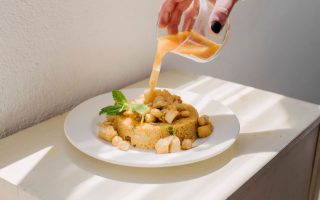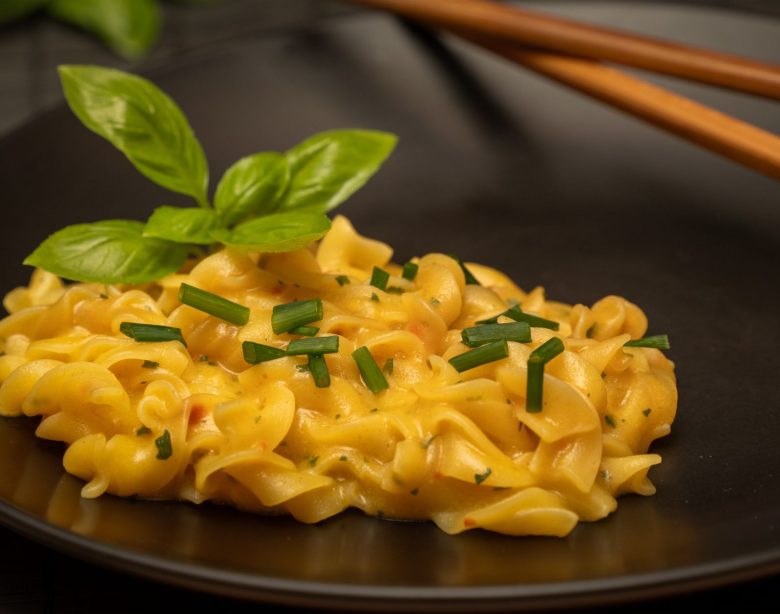
Roasted carrots give this red lentil pasta sauce a mellow sweetness and a color somewhere between tomato sauce and macaroni and cheese. The split lentils soften into the simmering tomatoes, then the carrots go in for a quick blend. The sauce comes out thick enough to tuck into shells or cling to the ridges on penne. A little lemon at the end gives it the brightness it needs after all that slow, sweet cooking.
The batch makes about 5 cups, enough to dress a pound of pasta and put about 2 cups away for another meal. Set that portion aside before you toss the pasta. Sauce on its own freezes flat in a bag, and you can decide what to serve it with when you pull it out. This is also a good recipe for using up the last few carrots in a bag. Scrub them well, trim the ends, and peel only if the skins are tough.
What you’ll need
Allow about 45 minutes, including time to roast the carrots while the lentils simmer. This makes about 6 servings of pasta, with extra sauce for the freezer.
- 1 pound carrots [450 g], cut into 1/2-inch [1.3-cm] rounds
- 2 tablespoons olive oil, divided
- 3/4 teaspoon fine sea salt, divided, plus more to taste and for the pasta water
- 1 small yellow onion, diced (about 3/4 cup)
- 2 garlic cloves, minced
- 1 tablespoon tomato paste
- 1 teaspoon dried oregano
- 3/4 cup dried split red lentils [about 145 g], sorted and rinsed
- 1 can crushed tomatoes (14 to 15 ounces [400 to 425 g])
- 2 cups water [480 mL], plus more as needed
- 1 to 2 teaspoons lemon juice or apple cider vinegar
- 1 pound dried pasta [450 g], such as shells, penne, or rotini
- Grated Parmesan or black pepper, for serving if you have them
Look for split red lentils, which are usually salmon orange in the bag. They soften quickly and break down when stirred. Whole green or brown lentils take longer and give the sauce a different texture. If you have a large can of crushed tomatoes open, measure about 1 3/4 cups for the pot and freeze the rest separately. You can freeze leftover tomato paste in tablespoon portions for the next batch, too.
Roast, simmer, and blend
- Roast the carrots. Heat the oven to 425°F [220°C]. Toss the carrot rounds on a rimmed sheet pan with 1 tablespoon oil and 1/4 teaspoon salt. Spread them in one layer so the edges have room to brown. Roast for 25 to 30 minutes, flipping halfway through. They’re ready when the undersides have golden brown patches and a fork slips easily through the thickest round.
- Soften the onion and toast the paste. While the carrots roast, heat the remaining tablespoon of oil in a medium pot over medium heat. Cook the onion for 5 to 7 minutes, stirring occasionally, until it looks translucent and bends easily under the spoon. Stir in the garlic, tomato paste, and oregano. Cook for about a minute, stirring, until the paste darkens slightly and smells sweet and savory.
- Simmer the lentils until they collapse. Add the rinsed lentils, crushed tomatoes, 2 cups water, and remaining 1/2 teaspoon salt. Bring to a gentle boil, then reduce the heat and simmer with the lid slightly ajar for 20 to 25 minutes. Stir every few minutes, scraping along the bottom as the lentils swell. Add a splash of water if the spoon starts dragging through a stiff mixture. A cooked lentil should crush into a paste against the side of the pot. If it still feels grainy, give it another few minutes and check again.
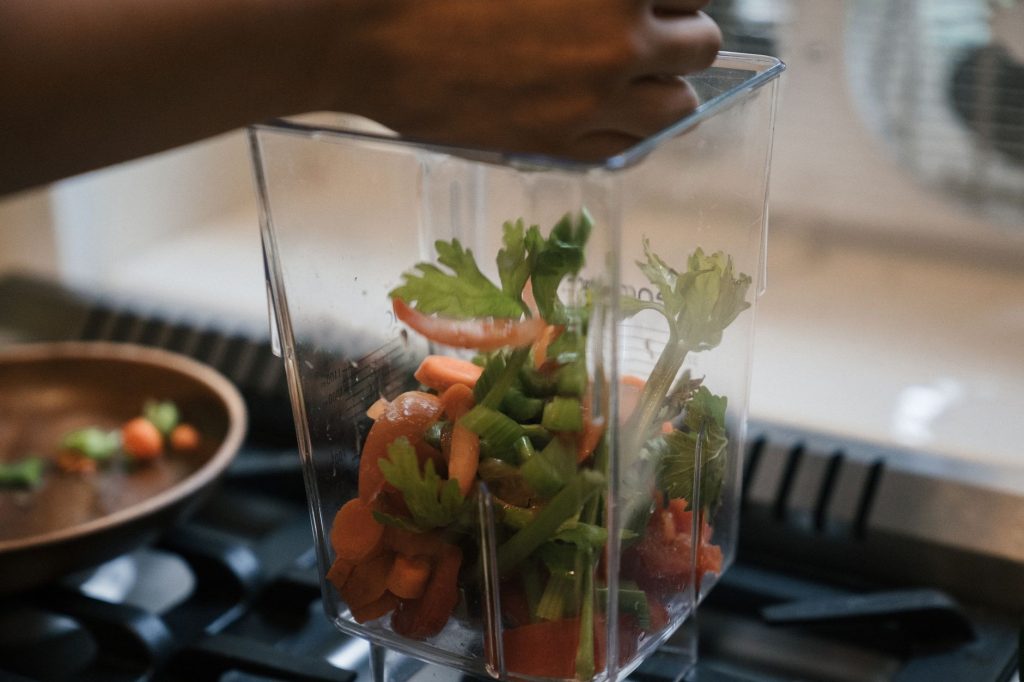
- Blend in the carrots. Take the pot off the heat and tip in the roasted carrots. Use an immersion blender, keeping the blade guard submerged to limit splatter. Blend until the sauce looks even in color and falls off a spoon in a thick ribbon. If you use a countertop blender, follow its instructions for hot liquids and work in small batches if the model allows them. Add plain water a tablespoon at a time if the blades need more liquid to catch. Stir in 1 teaspoon lemon juice or vinegar, then taste and add more acid or salt if needed.
- Finish the pasta. While the sauce simmers, bring a separate pot of salted water to a boil and cook the pasta until just tender. Reserve a mug of pasta water before draining. Set aside about 2 cups of sauce for another meal, then toss the pasta with the remaining sauce over low heat. Add the reserved water a splash at a time until the sauce coats each piece and the pasta moves easily when you stir. Serve with Parmesan or pepper at the table.
Freeze the extra sauce flat
Transfer the extra sauce to a shallow container and refrigerate it promptly, within 2 hours of cooking or within 1 hour if the temperature is above 90°F [32°C]. Use refrigerated sauce within 3 to 4 days. If you’re freezing it, spoon the chilled sauce into freezer bags in 1-cup or 2-cup portions. A cup is handy when you need lunch for two, while 2 cups will dress roughly 10 ounces [285 g] of dry pasta.
Label each bag with the contents, date, and portion size. Press out excess air, leave a little room for expansion, and seal. Lay the bags flat on a rimmed tray and gently spread the sauce into an even layer. Once solid, stack them or stand them upright like folders so it’s easy to slide one out. Use within 3 months for best quality.
Thaw a bag in the refrigerator overnight, preferably on a plate to catch drips. Empty the sauce into a small saucepan and stir over medium-low heat. It will look thicker after chilling, so start with a tablespoon or two of water per cup and add more as needed. Heat to 165°F [74°C] throughout, stirring so it warms evenly. Give it a taste before serving. A squeeze of lemon can perk it up again, especially if you’re spooning it over plain rice or potatoes.
Give the next portion a different job
For a quick pasta bake, toss the warmed sauce with cooked short pasta and any cooked broccoli or spinach you have left from dinner. Scatter cheese over the top and broil just until it bubbles. If there are only a few spoonfuls of sauce left, spread them on split English muffins, add a little shredded cheese, and toast until the edges are crisp.
The sauce can also stretch a pot of soup. Stir a cup into a simmering pot of broth with leftover cooked vegetables or white beans, adding more broth until it pours easily from a ladle. Since the carrots and lentils are already cooked, you can put that meal together while the toast browns.