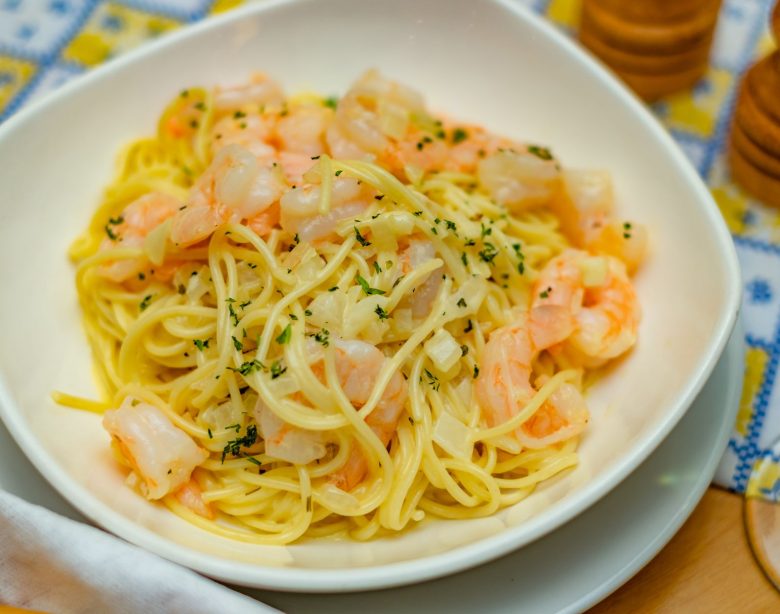
When dinner needs to get on the table quickly, this shrimp and snap pea noodle skillet gives you a full meal in one pan after the noodles are boiled. The shrimp get a quick sear, the noodles pick up a gingery soy sauce, and the snap peas go in during the final toss so they stay crisp. Put the skillet in the middle of the table and let everyone help themselves. A squeeze of lime at the table gives each bowl a little more brightness.
Two small steps make a big difference here. Blot the shrimp dry before they hit the skillet so the edges can brown. Then wait to add the snap peas until the noodles have been coated in sauce. The peas only need a minute or two in the hot pan to turn bright green and lose their raw edge.
What you’ll need
This recipe serves four and takes about 30 minutes once the shrimp are thawed. Thin spaghetti works well because it holds up to tossing and is easy to find. Use raw peeled, deveined shrimp with the tails removed so every bite is ready to eat. Medium or large shrimp both work. If yours are smaller, start checking them as soon as you turn them over.
For the skillet
- 8 ounces (225 g) thin spaghetti
- 1 pound (450 g) raw peeled and deveined shrimp, tails removed
- 8 ounces (225 g) sugar snap peas
- 3 scallions, thinly sliced, white and green parts separated
- 2 tablespoons neutral oil, such as canola, divided
- 1 lime, cut into wedges, for serving
For the sauce
- 3 tablespoons reduced-sodium soy sauce
- 2 tablespoons water
- 1 tablespoon unseasoned rice vinegar
- 2 teaspoons packed light brown sugar
- 1 teaspoon toasted sesame oil
- 2 medium garlic cloves, finely grated or minced
- 2 teaspoons finely grated fresh ginger
- 1 teaspoon cornstarch
How to make shrimp and snap pea noodles
- Get the shrimp and vegetables ready. If the shrimp are frozen, thaw them in the refrigerator overnight or in a sealed bag submerged in cold water just before cooking. Drain well, spread the shrimp on a layer of paper towels, and press more towels over the tops. Replace any soaked towels and blot again until the shrimp feel just tacky. Trim the stem ends of the snap peas, pulling away any tough strings as you go. Leave small pods whole and halve longer ones on a diagonal so they’re easier to pick up with the noodles.
- Whisk the sauce and boil the noodles. In a small bowl, stir the cornstarch into the water until smooth. Whisk in the soy sauce, vinegar, brown sugar, sesame oil, garlic, and ginger. Set the bowl near the stove. Boil the spaghetti until it’s just shy of tender, about one minute less than the package directs. Scoop out about 1/2 cup (120 mL) of the cooking water, then drain the spaghetti. A strand should bend easily and still have a little bite in the center.
- Sear the shrimp. Heat a large skillet over medium-high heat. Add 1 tablespoon of the neutral oil and swirl it to coat the bottom. When the oil shimmers, lay the shrimp in a single layer with a little space between them. If the skillet is crowded, cook in two batches, using half the tablespoon of oil for each. Leave the shrimp undisturbed for about 1 to 2 minutes, until pink around the edges and lightly golden underneath. Turn and cook until opaque through the thickest part and the shrimp reach 145°F (63°C), usually another 1 to 2 minutes. Transfer them to a clean plate.
- Coat the noodles. Reduce the heat to medium. Add the remaining tablespoon of neutral oil and the scallion whites. Stir for about 30 seconds, until fragrant. Whisk the sauce again to lift any cornstarch from the bottom of the bowl, then pour it into the skillet. Scrape up the browned bits and let the sauce bubble briefly, just until it starts to look glossy. Add the spaghetti and toss with tongs. If the strands are sticking together or the sauce looks pasty, add the reserved cooking water a tablespoon at a time until the noodles are lightly coated and move freely in the pan.
- Toss in the snap peas at the end. Add the peas to the sauced noodles and toss over medium heat for 1 to 2 minutes, until they’re bright green and crisp-tender. Bite into a pod to check for a juicy crunch. Return the shrimp and any juices on the plate, toss just until warmed through, and take the skillet off the heat. Scatter the scallion greens over the top and serve with lime wedges.
If the shrimp are pale when you turn them, check the pan before you add the next batch. A puddle means the shrimp are steaming. Let the liquid cook off and give the skillet a moment to heat back up before adding more shrimp. Once the shrimp are opaque, move them to the plate even if the color is light. They’ll stay tender while you finish the noodles.
Keeping dinner flexible
If you have regular spaghetti or linguine in the pantry, use the same weight and follow the same cue for doneness. Pull it from the pot while it still has a little bite, since it will soften as you toss it in the skillet. Have the sauce mixed and the peas trimmed before the noodles go into the pot. That way you can get the drained noodles into the sauce while they’re still warm and easy to separate.
For a child who likes the components separate, set aside a few cooked shrimp and a small forkful of noodles before tossing the rest in the skillet. Save a few snap peas to warm alongside the noodles during the last toss, or serve them separately if your family likes them raw. If you want heat in your own bowl, add a pinch of crushed red pepper at the table. The lime can go around the table, too, so everyone can taste and adjust their own serving.
If someone comes to the table late, give the noodles a quick turn with tongs and a splash of warm water to loosen the sauce. Pick up the noodles from the bottom of the pan as you toss so the shrimp and peas are distributed through the skillet.
Storing and reheating leftovers
Transfer leftovers to a shallow airtight container and refrigerate within two hours. Use them within three days. For an even reheat, put a serving in a skillet with a tablespoon of water, cover briefly over medium heat, then uncover and toss until it reaches 165°F (74°C) throughout. The water helps loosen the sauce as it warms. Add a fresh squeeze of lime after reheating. The peas will soften in the fridge, so if you have a few uncooked pods left, slice one or two over the reheated noodles for crunch.