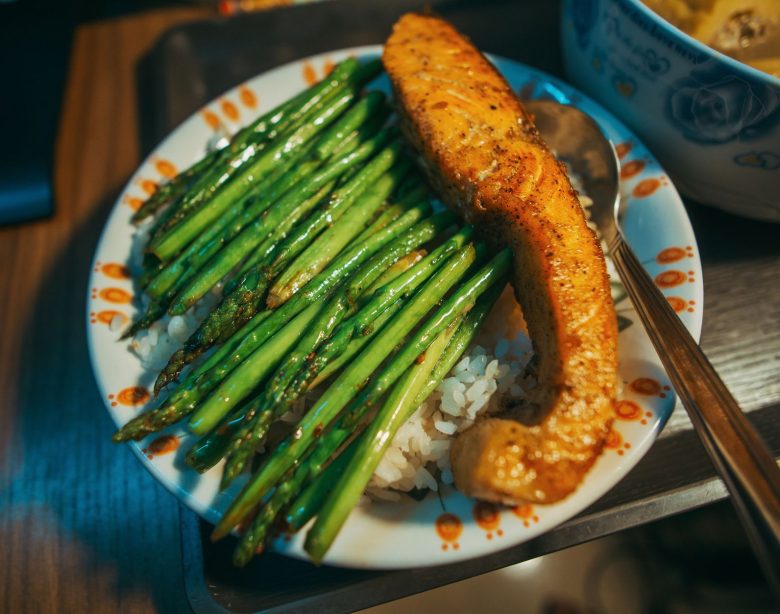
Roast salmon and asparagus side by side, then toss the warm spears with crisp radishes and a lemon-Dijon dressing just before you sit down. The asparagus picks up a little color at the tips, the salmon comes apart in broad flakes, and the thin radish slices give each bite some snap. There’s enough dressing to spoon a little over the fish, too.
This is a good dinner for a night when people are hungry at different levels. Set out bread or start a pot of rice while the oven heats, then let everyone help themselves. If someone prefers their vegetables plain, pull a few spears from the pan before you toss the salad. A little bowl of radish rounds on the table gives curious eaters a chance to try one on its own.
Ingredients for four
Allow about 35 minutes, including chopping and preheating. Use a rimmed half-sheet pan, about 18 by 13 inches [46 by 33 cm], so the fish and asparagus each have room.
For the sheet pan
- 4 salmon fillets, about 5 ounces [140 g] each, skin on or skinless
- 1 pound [450 g] asparagus, preferably medium-thick spears
- 2 tablespoons [30 mL] olive oil, divided
- 1/2 teaspoon fine sea salt, divided
- 1/4 teaspoon ground black pepper, divided
For the salad and dressing
- 6 medium radishes, about 3/4 cup [90 g] once thinly sliced
- 2 tablespoons [30 mL] fresh lemon juice
- 1 teaspoon Dijon mustard
- 1 teaspoon honey
- 1/4 teaspoon fine sea salt
- 3 tablespoons [45 mL] olive oil
- 2 tablespoons chopped fresh dill or flat-leaf parsley
How to make it
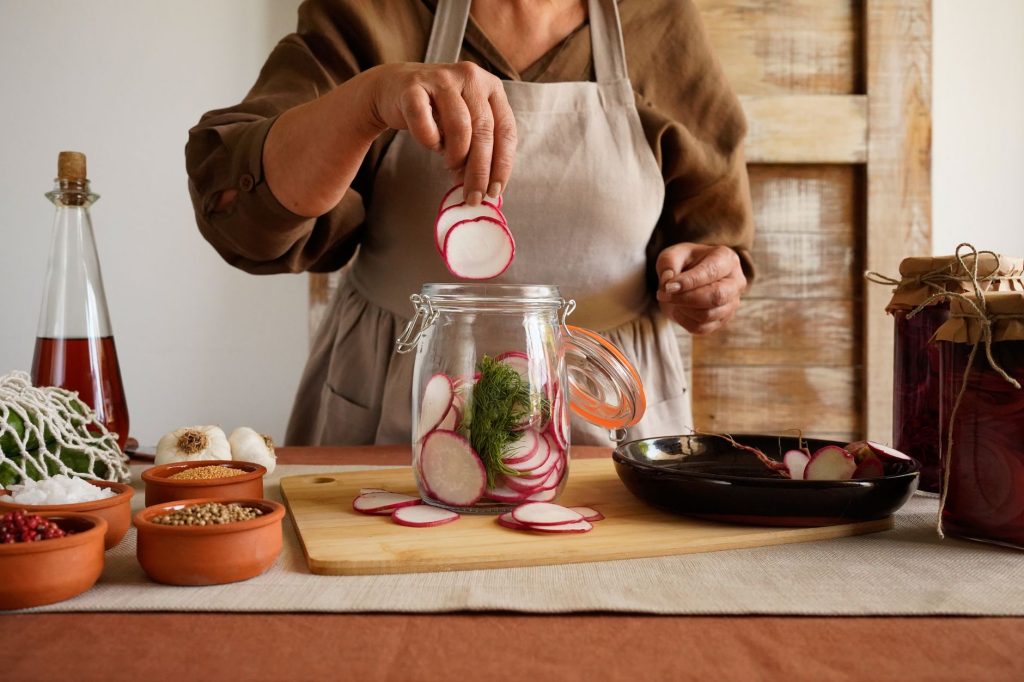
- Heat the oven and prep the vegetables. Set a rack in the middle of the oven and heat it to 425°F [220°C]. Line the sheet pan with parchment. Rinse and dry the asparagus, then trim off the pale, woody ends. Cut the spears into pieces about 2 inches long, leaving the tips intact. Scrub the radishes, trim both ends, and slice them into thin rounds. If a radish rolls as you cut it, halve it first and put the flat side against the board. Set the slices aside.
- Whisk the dressing. In a bowl large enough to hold the asparagus, whisk the lemon juice, mustard, honey, and salt until the honey dissolves. Trickle in the olive oil while whisking until the dressing looks slightly creamy. Stir in the dill or parsley. Spoon about 2 tablespoons of dressing into a small bowl for serving with the salmon.
- Arrange the sheet pan. Toss the asparagus with 1 tablespoon of oil, half the salt, and half the pepper right on the lined pan. Spread it in a single layer on one side. Pat the salmon dry with paper towels and set the fillets on the other side, skin side down if they have skin. Brush the tops with the remaining tablespoon of oil and sprinkle them with the remaining salt and pepper. Keep a little space between the fillets and wash your hands and any utensils that touched the raw fish.
- Roast the salmon and asparagus. Start checking both at 9 minutes. Fillets about an inch thick and medium spears usually take about 10 to 14 minutes. The asparagus is ready when a knife slides into a thick piece with slight resistance and the tips have a few browned spots. Check the salmon by inserting an instant-read thermometer through the side into the center of the thickest part. It should reach 145°F [63°C], and the flesh should separate into flakes with gentle pressure from a fork. If either finishes first, lift it off with a clean spatula and return the pan to the oven to finish the other.
- Toss and serve. Transfer the warm asparagus to the bowl of dressing and toss to coat. Add the radishes just before making up the plates. Give the salad a quick toss so the rounds stay crisp. Serve alongside the salmon and pass the reserved dressing at the table.
Adjust for the fish and spears you have
Choose fillets that are close in thickness so they’re ready around the same time. If one has a thin tail end, tuck the tip underneath before roasting. For frozen portions, thaw them overnight in the refrigerator, following any directions on the package about removing the wrapping before thawing. Blot away the moisture before seasoning so it doesn’t pool on the pan.
Pencil-thin asparagus can go in after the salmon has roasted for about 4 minutes. If the spears are especially thick, split the lower stalks lengthwise before cutting them into pieces. Try to keep the tips in a single layer with a little air around them. A pile of asparagus can turn soft at the bottom while the pieces on top are still firm.
If the radishes are particularly peppery, slice them as thinly as you can. For a milder bite, soak the slices in cold water for 5 to 10 minutes while the pan is in the oven, then drain and pat them dry. Water clinging to the slices can thin out the dressing.
Make it dinner
If you want a head start earlier in the day, trim and cut the asparagus, whisk the dressing, and refrigerate them in separate covered containers. Shake or whisk the dressing again before using it. You can slice the radishes ahead as well. Tuck a dry paper towel into their container to catch any extra moisture, then take them out when the salmon is ready to plate.
Buttered rice or couscous catches the dressing that runs off the fish. If you have bread, warm it while you toss the salad and bring it to the table for mopping up the lemony juices. For a meal that needs to stretch a bit further, fold a drained, rinsed can of white beans into the warm asparagus before adding the radishes. Taste after tossing and add a squeeze of lemon if the beans have mellowed the dressing more than you like.
For kids who like to help, let them whisk the dressing or spoon the sliced radishes into the bowl once the hot pan is out of the way. When serving younger children, flake their portions, check for pin bones, and cut the vegetables to a size and texture they can manage.
Storing leftovers
Refrigerate leftovers in shallow covered containers within 2 hours of cooking, or within 1 hour if the air temperature is above 90°F [32°C]. Use the cooked salmon and asparagus within 3 to 4 days. If you’re planning for leftovers, keep some radishes and dressing separate so the slices stay crisp and the asparagus can be dressed just before the next meal.
Cold salmon flakes easily over greens or into a wrap with the leftover asparagus. If you’d like the fish warm, reheat it covered with a small splash of water until the center reaches 165°F [74°C], then add the radishes at the table.